
Over 70% of premature failures in positive displacement blowers stem from improper lubrication or incorrect oil selection. For plant engineers and maintenance managers, understanding the nuances of roots blower lubrication is not just about maintenance—it’s about preventing catastrophic failure, reducing downtime, and maximizing ROI.
This guide provides a comprehensive, OEM-informed deep dive into Roots blower lubrication. We will cover everything from ISO viscosity selection and synthetic oil economics to step-by-step change procedures and cross-reference tables for approved products.
1. Understanding Roots Blower Lubrication Dynamics
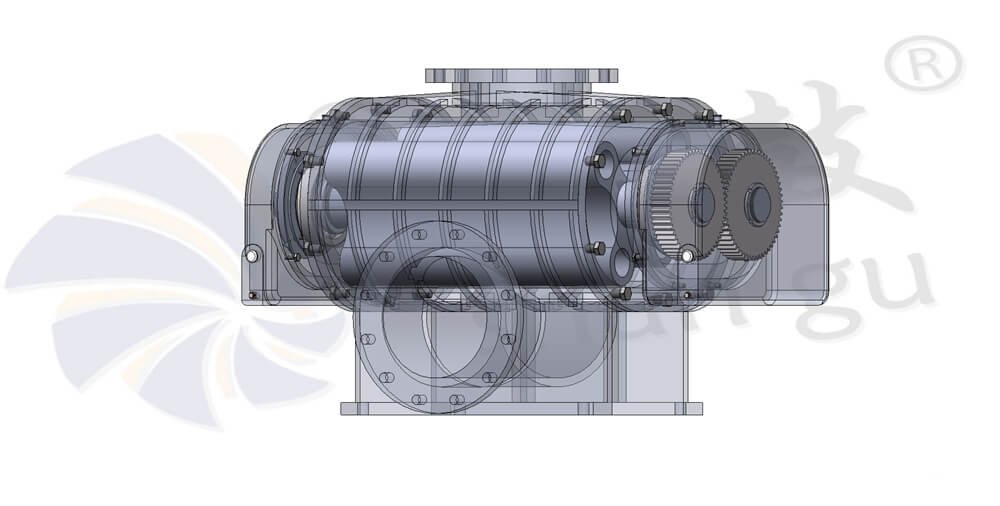
To troubleshoot or maintain a blower correctly, you must first understand the two distinct lubrication zones within the machine.
A. Gear End vs. Drive End Lubrication
Roots blowers have two critical sections with different lubrication requirements:
- Gear End (Timing Gear Side): This side houses the precision timing gears that keep the two rotors synchronized. It is almost universally oil-lubricated. The oil bath cools the gears and provides a protective film against wear.
- Drive End (Shaft Extension Side): Traditionally, this side used grease lubrication for the bearing. However, modern “dual splash” (DSL) designs now utilize oil lubrication on both ends for enhanced cooling and longevity. Identifying which system your blower uses is the first step.
B. The Role of Lubricants in Positive Displacement Blowers
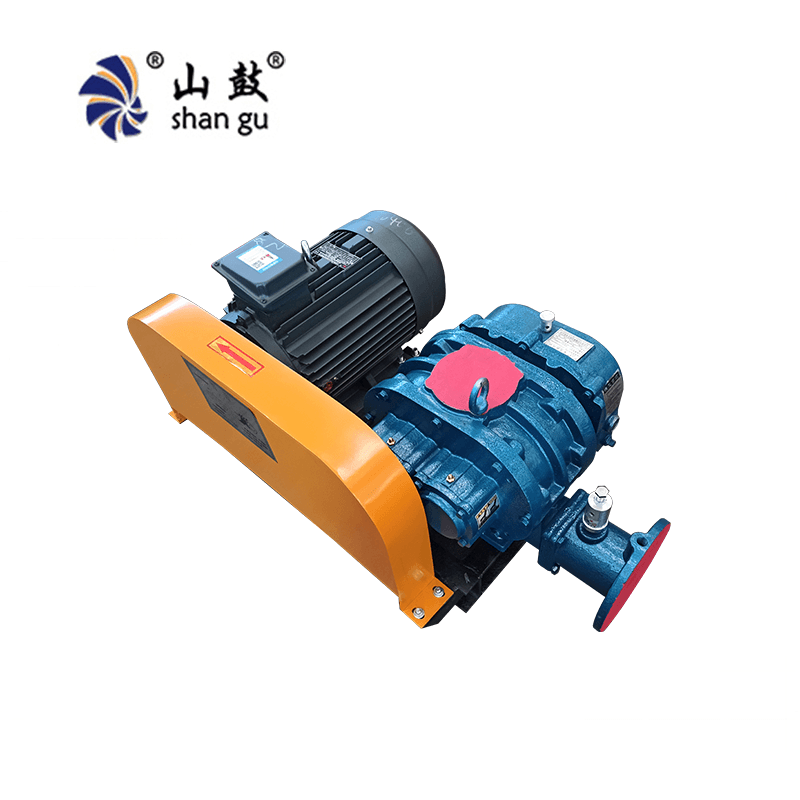
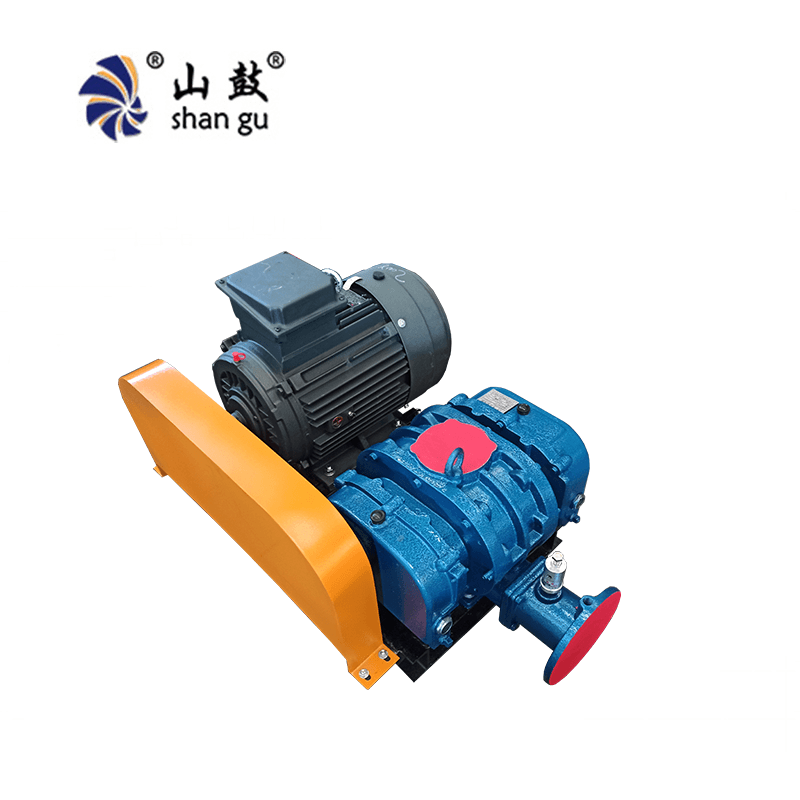
Industrial lubricants in a Roots blower perform critical functions beyond simple friction reduction:
- Heat Dissipation: Lubricating oil carries heat away from the gear mesh and bearings.
- Cavitation Damping: Proper lubrication absorbs shock loads from pressure pulsations.
- Corrosion Protection: Prevents rust formation on internal ferrous components during idle periods.
2. How to Select the Right Blower Oil: Viscosity & Specifications
Choosing the wrong oil is the fastest route to a blower rebuild.
1) Why Non-Detergent R&O Oils are Non-Negotiable
This is a critical rule: Never use automotive engine oil in a Roots blower.
Engine oils contain detergents that hold contaminants in suspension. In a blower, these detergents will prevent water from separating, causing it to emulsify with the oil and destroy bearing surfaces. You must use a Non-Detergent, Rust & Oxidation (R&O) inhibited industrial gear oil.
- Approved Chemistry: ISO VG 150, 220, or 320 mineral oil with anti-foam additives.
- Reference Standard: L-CKC220 medium-load industrial gear oil per JB/T 8831-2001.
2) Ambient Temperature vs. ISO Viscosity Grades (VG)
Your ambient operating temperature dictates the oil’s required viscosity. Using oil that is too thick will cause cavitation and overheating. Too thin, and you risk metal-to-metal contact.
Refer to the table below for splash-lubricated systems:
| Ambient Temperature | Recommended ISO Viscosity Grade | Typical Application |
|---|---|---|
| Below 22°F (-10°C) | ISO VG 100 Full Synthetic Gear Oil | Outdoor winter operation, cold climates |
| 22°F to 90°F (0°C to 32°C) | ISO VG 220 Middel Duty Industrial Gear Oil | Standard shop floor / ambient conditions |
| Above 90°F (32°C) | ISO VG 220 Full SyntheticGear Oil | High-heat environments, tropical climates |
3) Synthetic Blower Oil vs. Mineral Oil: The ROI Breakdown
While mineral oil (ISO VG 220) is acceptable for standard duty, synthetic lubricants offer a compelling return on investment for continuous operation.
| Feature | Mineral Oil (ISO VG 220) | Full Synthetic Oil (e.g., 3007 LN220) |
|---|---|---|
| Thermal Stability | Degrades rapidly above 200°F (93°C) | Stable up to 240°F (115°C) |
| Lifespan | ~2,000 hours | 4,000 – 8,000 hours |
| Oil Change Interval | 3 Months (standard operation) | 6-12 Months |
| Viscosity Index | Lower (thickens more in cold) | Higher (stable across temps) |
| Best For | Intermittent duty, ambient temps <90°F | High-pressure, continuous run, extreme ambient temps |
3. Oil Lifespan and Optimal Change Intervals
1) The 150-Hour Initial Break-In Flush
For a new blower or one that has undergone major repair (new gears/bearings):
- Fill with the specified ISO VG oil.
- Run the blower for 150 hours under normal load.
- Drain immediately while warm. The initial oil will contain microscopic wear particles from gear and bearing break-in.
- Flush, clean the magnetic drain plugs, and refill with fresh oil for the standard service life.
2) Calculating Lifespan Based on Operating Temperatures
The “three-month rule” is a guideline, but actual oil life is a function of temperature.
- The Rule of Thumb: For every 15-18°F (8-10°C) rise in oil sump temperature above the baseline of 180°F (82°C), the oil’s service life is cut in half.
- Estimation Formula: Approximate Oil Temp ≈ Discharge Pressure Temp × 0.8.
OEM Limits (Per Your Technical Data):
- Mineral Oil: Max oil temp 149°F (65°C). Bearing temp max 203°F (95°C).
- Synthetic Oil (HPAC models): Max oil temp 239°F (115°C). Bearing temp max 293°F (145°C).
If your oil temperature exceeds 200°F (93°C) regularly, switch to a full synthetic to avoid carbonization and varnish formation.
4. Step-by-Step Guide: How to Safely Change Roots Blower Oil
1: Step 1: Pre-Drain Preparation and Safety Lockout (LOTO)
- Run the blower for 10-15 minutes to warm the oil (reduces viscosity for complete draining).
- Perform Lock-Out/Tag-Out (LOTO). Isolate and discharge all system pressure.
- Place a suitable drain pan under the gear end oil tank.
2: Step 2: Draining and Inspecting the Old Oil for Contaminants
- Remove the bottom drain plug. Allow oil to drain completely.
- Inspect the oil:
- Milky/Cloudy: Water contamination (condensation or cooling leak).
- Metallic particles (glitter): Gear wear or bearing spalling. Immediate investigation required.
- Black/Sludge: Thermal degradation or excessive age.
3: Step 3: Cleaning Magnetic Drain Plugs
- All OEM drain plugs are magnetic. Wipe the plug clean of any metallic sludge or fine “fur.”
- A small amount of fine paste is normal. Any hard chunks or flakes are a red flag.
4: Step 4: Refilling to the Exact Sight Glass Centerline
- Replace and tighten the drain plug.
- Remove the fill/breather port on top of the gear housing.
- Add the recommended ISO VG oil slowly.
- Critical: Fill until the oil level reaches the center red dot of the oil sight glass.
- ⚠️ Overfilling: Causes churning losses, aeration, overheating, and seal leakage.
- ⚠️ Underfilling: Leads to gear starvation, increased wear, and eventual seizure.
5. Troubleshooting Common Roots Blower Lubrication Failures
1): Why is My Blower Oil Turning Black or Milky?
| Symptom | Color | Root Cause | Corrective Action |
|---|---|---|---|
| Thermal Degradation | Dark Brown / Black | Sustained high temp >212°F (100°C), wrong viscosity | Drain, flush, replace with correct viscosity or synthetic oil. Check cooling system. |
| Water Contamination | Milky / Tan Emulsion | Condensation from thermal cycling, failed water-cooled jacket (gasket leak) | Drain immediately. Flush with fresh oil. Repair water leak source. |
| Aeration (Foaming) | Cloudy with bubbles | Overfilling, wrong oil (no anti-foam), clogged breather | Correct oil level. Replace oil with approved R&O oil. Clean/replace breather. |
2): Diagnosing Gear End Oil Leaks and Seal Failures
An oil leak is rarely just a “bad seal.” It indicates a system problem.
- Shaft Seal Leakage: Often caused by using incompatible oil additives (e.g., certain Mobil SHC grades) that swell or degrade the Buna-N or FKM lip seals.
- Breather Spewing Oil: Indicates overfilling or excessive aeration. Check oil level first.
- Discharge Line Carrying Oil: This points to a failed internal piston ring seal, allowing oil from the gear end to blow past the rotor shaft and into the discharge airstream.
[Image: Cutaway diagram showing a failed shaft lip seal vs. a functional seal]
6. OEM Approved Products and Synthetic Cross-Reference Market
Capturing commercial research intent for procurement managers.
| OEM / Application | Recommended Product | ISO VG | Equivalent Cross-Reference |
|---|---|---|---|
| RSR / MJSR (Standard) | L-CKC220 Medium-load Gear Oil | 220 | Mobil DTE 25, Shell Omala S2 G220 |
| RSR / MJSR (HPAC / High Pressure) | 3007 LN220 Synthetic Bearing Gear Oil | 220 | ROOTS™ Synthetic Blower Oil |
| Single-Grease Drive End (ZL-3H) | Synthetic Lithium-Based Grease | NLGI #2 | Shell Gadus S2 V100, Mobilux EP 2 |
| MTRZ Series (Circulating System) | ISO VG 150 Medium-load Gear Oil | 150 | Mobil DTE 24, Shell Omala S2 G150 |
| Shaft Mechanical Seal Circulation | Industrial White Oil #10 | 10 | Chevron White Oil, Sonneborn Blandol |
| Extreme Cold (<14°F / -10°C) | Full Synthetic 100# Gear Oil | 100 | Mobil SHC 629, ROOTS™ Cold Climate Oil |
| Food-Grade (FDA Compliant) | Synthetic PAO Food-Grade Oil | 220 | Mobil SHC Cibus 220, Klüber Summit HySyn FG |
Conclusion-Roots Blower Lubrication
Mastering Roots blower lubrication is about following OEM specifications and understanding the physics of heat and contamination. By selecting the correct ISO VG based on your ambient temperature, respecting the non-detergent requirement, and adhering to the 150-hour break-in rule, you can reliably achieve 10+ years of service life from your equipment.