
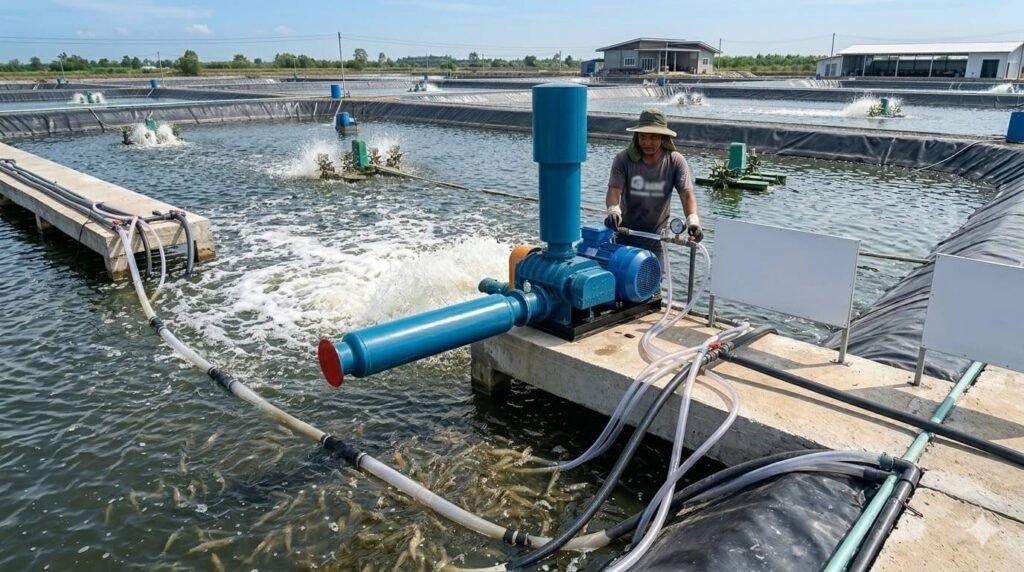
In the competitive world of high-density shrimp farming, maintaining optimal water quality is not just a goal—it is the lifeline of your entire operation. As farmers push towards higher stocking densities to maximize yields, the margin for error shrinks dramatically. The single most critical factor determining success or failure is Dissolved Oxygen (DO) . While traditional aeration methods like paddle wheels have served the shrimp farming industry for decades, they often fall short in intensive systems. Enter the Roots blower: a robust, energy-efficient technology that is rapidly becoming the gold standard for professional shrimp farmers worldwide. This article explores why integrating a Roots blower for shrimp farming is the ultimate investment in productivity, sustainability, and profitability.
Why Aeration is the Lifeline of High-Density Shrimp Farming
To understand the value of a Roots blower, we must first understand the immense pressure placed on intensive aquaculture systems.
Challenges of Maintaining Dissolved Oxygen (DO) in Intensive Ponds
High-density farming, often exceeding 100-200 shrimp per square meter, creates a biological environment that is inherently unstable. As shrimp biomass increases, so does the oxygen demand for respiration and the decomposition of waste (feed, feces, and ammonia). During critical periods—such as molting, feeding, or sudden weather changes—DO levels can plummet to dangerous levels within minutes.
The Impact of Hypoxia on Shrimp Growth and Survival Rates
Chronic low oxygen (hypoxia) doesn’t just kill shrimp; it slowly erodes profitability. Sub-lethal hypoxia stresses shrimp, suppressing their immune systems and making them susceptible to diseases like Vibrio or Early Mortality Syndrome (EMS). It also reduces feed intake and conversion rates, leading to stunted growth and asynchronous pond populations. Maintaining DO above 4-5 mg/L is non-negotiable for ensuring high survival rates and rapid growth.
What Makes Roots Blower Superior for Shrimp Farming Aquaculture?
While various aerators exist, positive displacement blowers—specifically Roots blowers—offer distinct mechanical advantages for intensive farming.
Constant Airflow and High Pressure for Deep Water Ponds
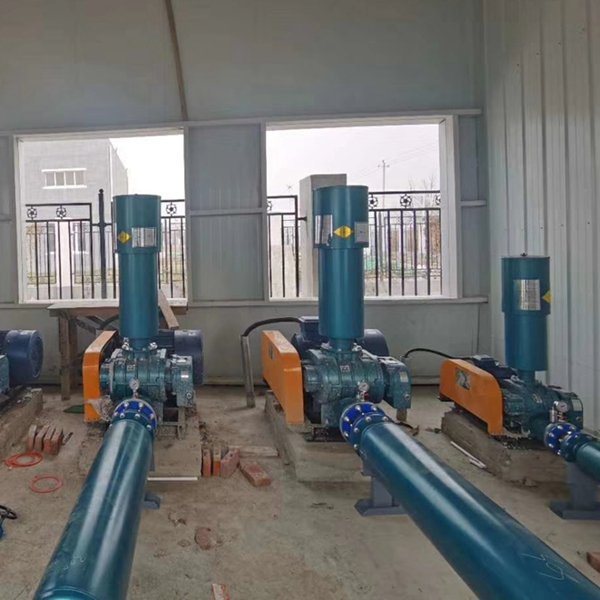
Unlike centrifugal blowers or axial fans, a Roots blower delivers a constant volume of air regardless of pressure changes. This is crucial for deep ponds (2+ meters) or systems with extensive piping networks. The high pressure generated by a rotary lobe blower for fish pond applications ensures that air reaches the deepest points of the basin, where oxygen depletion is most critical.
Oil-Free Air Delivery: Ensuring Water Purity for Shrimp Health
Contamination is a constant fear in aquaculture. High-quality Roots blowers are designed with precision air gaps that prevent lubrication oil from entering the air stream. This oil-free air delivery guarantees that the air diffused into your pond is pure, preventing surface films and chemical contamination that could stress or kill sensitive shrimp stocks.
Durability and Continuous 24/7 Operation
Shrimp farming is not a 9-to-5 job; aeration must run 24 hours a day, 7 days a week. Roots blowers are built for this industrial duty cycle. With few moving parts and robust bearings, they provide years of reliable service with minimal downtime, giving farmers peace of mind that their oxygen supply will not fail.
Roots Blower vs. Paddle Wheel Aerators: A Comparative Analysis
The debate between centralized aeration and mechanical splashing is common. Here is a breakdown of how the two technologies stack up.
| Feature | Roots Blower (with Diffusers) | Paddle Wheel Aerator |
|---|---|---|
| Oxygen Transfer | High (Fine bubble diffusion) | Moderate (Surface splashing) |
| Energy Efficiency | High for large/deep ponds | Moderate to Low |
| Maintenance | Low (Centralized unit) | High (Multiple motors/gearboxes) |
| Water Column Mixing | Uniform bottom-to-top mixing | Primarily surface mixing |
| Installation Area | Compact (Onshore) | Intrusive (In-pond) |
Oxygen Transfer Efficiency (OTE) Comparison
Roots blowers paired with fine bubble diffusers drastically increase the surface area of oxygen contact with the water. This results in a much higher Oxygen Transfer Efficiency (OTE) compared to paddle wheels, which primarily disturb the surface. In deep ponds, this efficiency difference is even more pronounced.
Energy Consumption and Operational Costs
While a Roots blower motor might seem large, one unit can often replace several paddle wheel motors. Furthermore, because oxygen transfer is more efficient, you may not need to run the system as hard to maintain target DO levels, leading to significant savings in aeration power consumption.
Maintenance Requirements and Lifespan
Paddle wheels are exposed to the elements, submerged in water, and subject to physical damage from debris or animals. Roots blowers are housed in a controlled environment. Maintenance is usually limited to oil changes, belt checks (in some models), and air filter cleaning—a much simpler and less frequent task.
Key Benefits of Using Roots Blowers in Biofloc Systems
The rise of the Biofloc system has cemented the Roots blower’s place in modern aquaculture. Biofloc requires more than just oxygen; it requires constant motion.
Keeping Solids in Suspension: The Role of Bottom Aeration
In a Biofloc system, heterotrophic bacteria need to be kept suspended in the water column to consume waste and form protein-rich flocs. Paddle wheels create a circular surface current but often leave the center of the pond stagnant. A centrally installed Roots blower system with air diffusers lifts water from the bottom, creating a “airlift” effect that turns over the entire water column and keeps flocs perfectly suspended.
Promoting Beneficial Microbial Growth
The consistent, gentle mixing provided by a Roots blower ensures that oxygen and nutrients are evenly distributed. This creates an ideal environment for beneficial nitrifying bacteria to colonize, which helps control ammonia levels naturally, reducing the need for water exchange.
How to Choose the Right Roots Blower for Your Shrimp Farming?
Selecting the correct blower is a technical decision. Here is a simplified approach to getting it right.
Calculating Air Demand Based on Stocking Density
To determine the required airflow, you can use the following base formula:
Q = D x W x S x Er
(Where: Q = Total Airflow (m³/h), D$= Stocking Density (shrimp/m²), W = Average Shrimp Weight (kg), S = Safety Factor (1.5-2.5 for high-density), Er = Respiration/Oxygen Requirement)
It is always advisable to consult with an aeration specialist to fine-tune this calculation based on your specific water quality and feed input.
Matching Blower Pressure to Pond Depth
A general rule of thumb is that you need 1 psi of pressure for every 2.3 feet (0.7 meters) of water depth, plus additional pressure to account for friction losses in pipes and diffusers. For a 2-meter-deep pond, a blower rated for 3-4 psi is typically sufficient.
The Importance of Quality Aeration Accessories (Diffusers & Hoses)
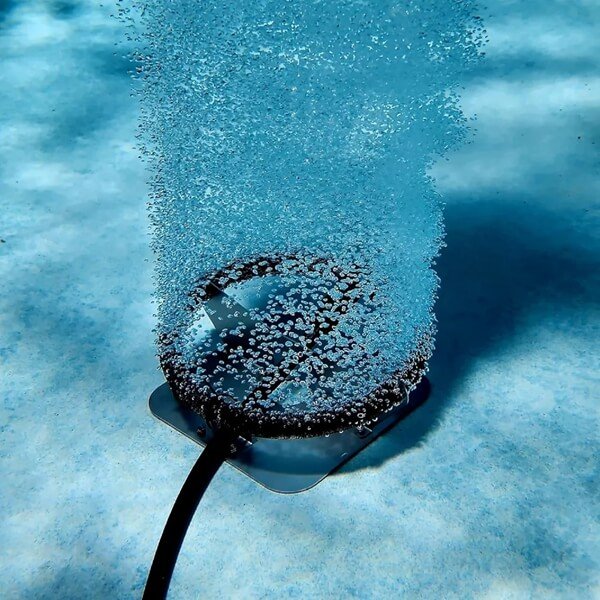
A Roots blower is only as good as its delivery system. Investing in high-quality tubing and fine bubble diffusers is essential. Clogged or coarse diffusers negate the efficiency benefits of your blower. Ensure your accessories are compatible with the blower’s output pressure.
Real-World Success: Boosting Yields with Roots Blower Technology
Consider a farm in Thailand that transitioned from 12 paddle wheel aerators to a centralized system of two 30 HP Roots blowers. Despite the initial investment, they reported a 22% reduction in electricity bills within the first six months. More importantly, the consistent DO levels allowed them to safely increase stocking density by 15%, resulting in a net profit increase of over 30% per cycle, with lower mortality rates during the critical night-time hours when oxygen traditionally dips.
Conclusion: Investing in the Future of Sustainable Aquaculture
As the demand for seafood rises and farming space becomes limited, the industry must move towards intensification. However, intensification requires precision engineering. The Roots blower provides the reliability, efficiency, and performance required to master dissolved oxygen management in aquaculture.
By switching to a Roots blower for your shrimp farming needs, you are not just buying a machine; you are investing in a more stable, productive, and profitable future for your farm.