
When operating a Roots blower, the sealing system is not just an accessory—it is a critical component that defines performance, safety, and total cost of ownership. Selecting the right seal can mean the difference between efficient, reliable operation and frequent downtime, costly leaks, or even hazardous failures. This guide provides a comprehensive comparison of the four main roots blower seals types—Labyrinth, Packing, Piston Ring, and Mechanical Seals—to help you make an informed decision based on your specific application needs.
Why Sealing Matters in Roots Blowers
The primary role of seals in a Roots blower is twofold: to prevent lubricating oil from entering the gas chamber and to prevent the conveyed medium—whether air or a special process gas—from leaking out along the shaft. An effective seal maintains internal pressure, ensures purity of the conveyed medium, and protects external bearings and the environment.
The primary role of a seal in a Roots blower is twofold: to prevent lubricating oil from entering the gas chamber and to prevent the conveyed medium—whether air or a special process gas—from leaking out along the shaft. An effective seal maintains internal pressure, ensures purity of the conveyed medium, and protects external bearings and the environment.
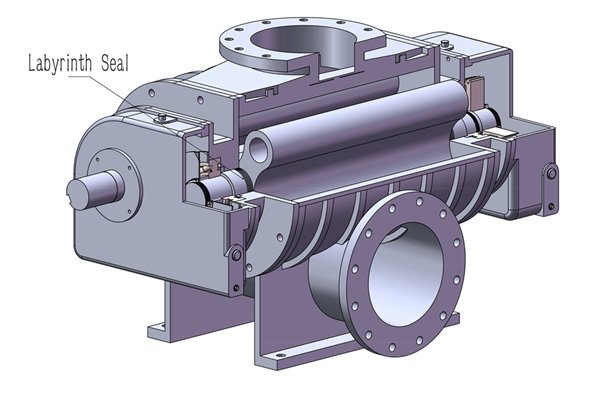
Failure of these seals leads directly to decreased volumetric efficiency, increased energy consumption, potential contamination of the process, and accelerated wear of bearings and other components. In applications involving flammable, toxic, or expensive gases, a seal failure poses serious safety and financial risks.
Comprehensive Comparison: The 4 Main Types of Roots Blower Seals
Understanding the design and operational principles of each seal type is the first step toward optimal selection.
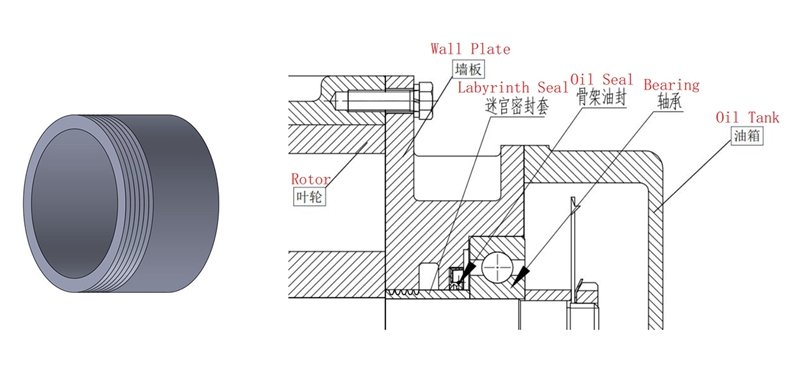
1. Labyrinth Seals (The Standard Choice)
How It Works: The labyrinth seal is a non-contact seal. It consists of a series of intricate grooves and teeth that create a tortuous path for any gas attempting to leak. This path creates high fluid resistance, effectively minimizing leakage without any physical contact between stationary and rotating parts.
Advantages: Exceptionally long service life due to the absence of wear, excellent suitability for high rotational speeds, and very low maintenance requirements.
Disadvantages: It cannot achieve 100% zero leakage. Some gas slip is inherent to the design, making it unsuitable for applications involving hazardous, toxic, or valuable gases where leakage is unacceptable.
Best Applications: Standard air blowers, wastewater treatment aeration, and any clean-air application where minor leakage is not a critical concern.
2. Packing Seals (The Traditional Solution)
How It Works: Also known as gland packing or rope seals, this method uses braided rings of soft material (like graphite or PTFE) compressed around the shaft in a stuffing box. A gland follower compresses the packing, creating radial pressure against the shaft to form a seal.
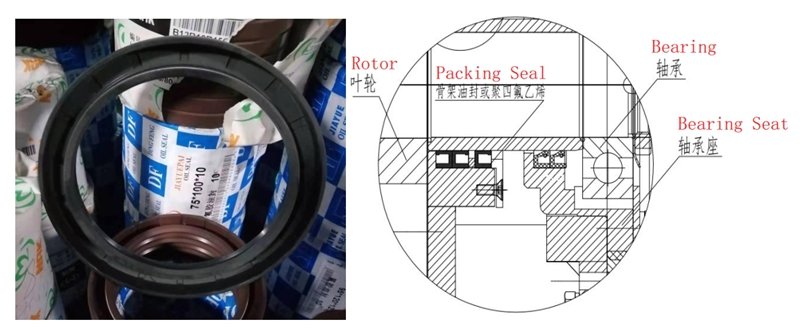
Advantages: Low initial cost, simple installation, and the ability to be adjusted or “tightened” in situ to compensate for minor wear.
Disadvantages: Requires regular adjustment and eventual replacement. Continuous friction can cause shaft wear over time, and it offers only a moderate sealing performance with ongoing, measurable leakage.
Best Applications: Low-pressure blowers, older equipment, or situations with very tight budgets where some leakage and periodic maintenance are acceptable.
3. Piston Ring Seals (The Heavy-Duty Seal)
How It Works: Functioning similarly to piston rings in an engine, these are metallic rings (often carbon or cast iron) that sit in grooves on the shaft or housing. Their inherent spring tension (or gas pressure from behind) presses the ring’s outer surface against the sealing bore.
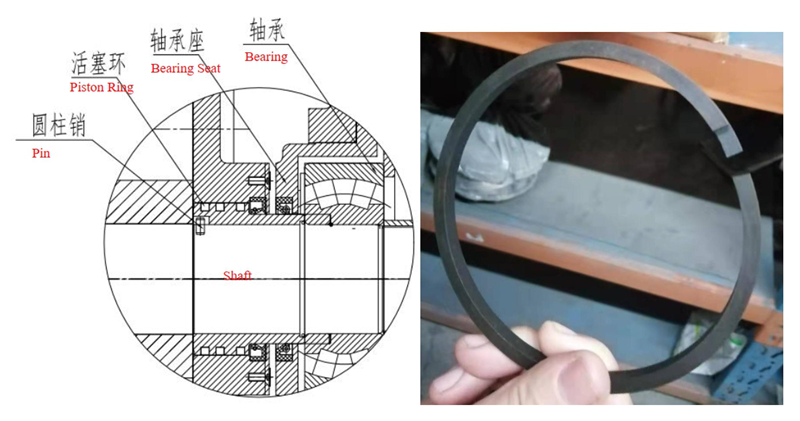
Advantages: More robust than packing seals, offering better performance in higher-pressure and higher-temperature environments.
Disadvantages: Higher friction levels than labyrinth or mechanical seals, which can lead to increased power consumption and heat generation. Requires precise lubrication management.
Best Applications: Industrial blowers operating at elevated pressures where packing seals would fail quickly, but where absolute zero leakage is not mandated.
4. Mechanical Seals (The High-Performance Choice)
How It Works: A mechanical seal consists of two precisely lapped, flat faces—one rotating with the shaft and one stationary in the housing. Spring load and system pressure keep these faces in intimate contact, creating a dynamic seal at the interface while a secondary static seal completes the system.
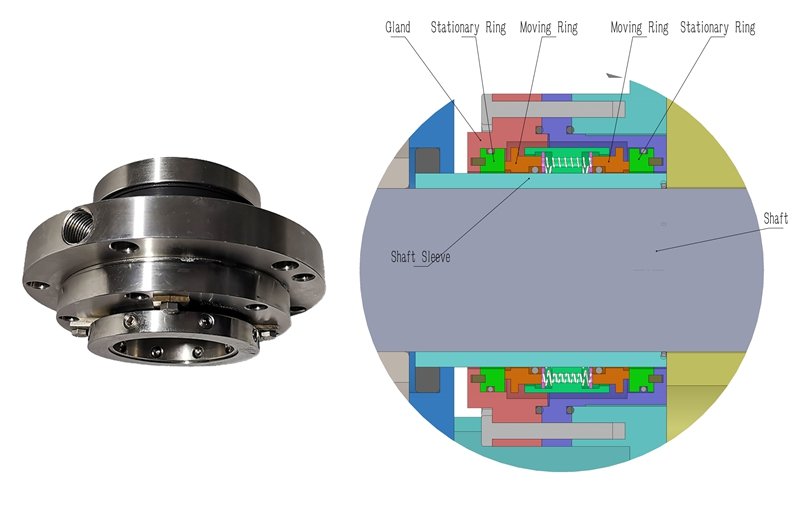
Advantages: Provides near-zero or trace leakage, making it ideal for hazardous or expensive gases. Generates very little friction loss, improving efficiency. Offers high reliability in demanding conditions.
Disadvantages: Highest initial purchase cost. Installation requires significant precision and expertise. If the primary sealing faces are damaged, the entire seal cartridge usually must be replaced.
Best Applications: Critical applications involving hydrogen, natural gas, biogas, toxic chemical vapors, or any situation where preventing gas escape is paramount for safety, environmental, or economic reasons.
Key Factors to Consider When Selecting Roots Blower Seals
Use this decision matrix to guide your selection process:
- Media Type: Is it inert air, an explosive gas (like hydrogen), a toxic chemical, or an expensive process gas? Mechanical seals are mandatory for hazardous/valuable media.
- Operating Pressure & Temperature: Piston ring seals handle higher pressures better than packing. Mechanical and labyrinth seals are suitable for a wide range, but material selection becomes critical at extremes.
- Maintenance Budget & Philosophy: Labyrinth seals offer the lowest lifetime maintenance. Packing seals have low upfront cost but high recurring labor. Mechanical seals have high upfront cost but long, predictable service intervals.
- Leakage Tolerance: If leakage is absolutely unacceptable, only a dual or tandem mechanical seal system will suffice. For minimal leakage in air, labyrinth is sufficient.
Summary Table: Seal Types vs. Performance
| Seal Type | Leakage Level | Maintenance Frequency | Initial Cost | Longevity & Durability |
|---|---|---|---|---|
| Labyrinth | Low (Air only) | Very Low | Medium | Very High |
| Packing | Medium to High | High | Very Low | Medium |
| Piston Ring | Medium to Low | Medium | Medium | Medium-High |
| Mechanical | Zero/Trace | Medium (Predictable) | High | High |
Conclusion: Which Roots Blower Seals Is Better for You?
There is no single “best” seal for all Roots blowers—only the optimal seal for your specific operating conditions and priorities.
- For standard air blowers (e.g., aeration, pneumatic conveying), the Labyrinth Seal is often the most cost-effective and reliable long-term choice.
- For handling flammable, toxic, or valuable process gases, the investment in a Mechanical Seal is non-negotiable for safety and operational integrity.
- Packing Seals remain a viable, low-capital option for non-critical, low-pressure duties where maintenance access is easy.
- Consider Piston Ring Seals for heavy-duty air or inert gas applications that operate at higher pressures than packing can handle.
Consult with your blower manufacturer or a sealing specialist to review your specific gas properties, operating parameters, and total cost of ownership goals.