
Modern coal-fired power plants generate fly ash in staggering quantities—often hundreds of tons per day. This fine, abrasive byproduct must be transported swiftly and safely from electrostatic precipitators (ESPs) or baghouses to storage silos for disposal or sale to the cement industry. The component tasked with making this movement possible is the pneumatic conveying system, and at its core lies the Roots blowers.
When a Roots blower fails, the consequences are immediate and severe: ash buildup in hoppers, boiler derates, and potential environmental violations. For plant engineers and procurement managers, selecting a blower built for this punishing environment is not just an equipment decision—it is a strategic investment in operational stability.
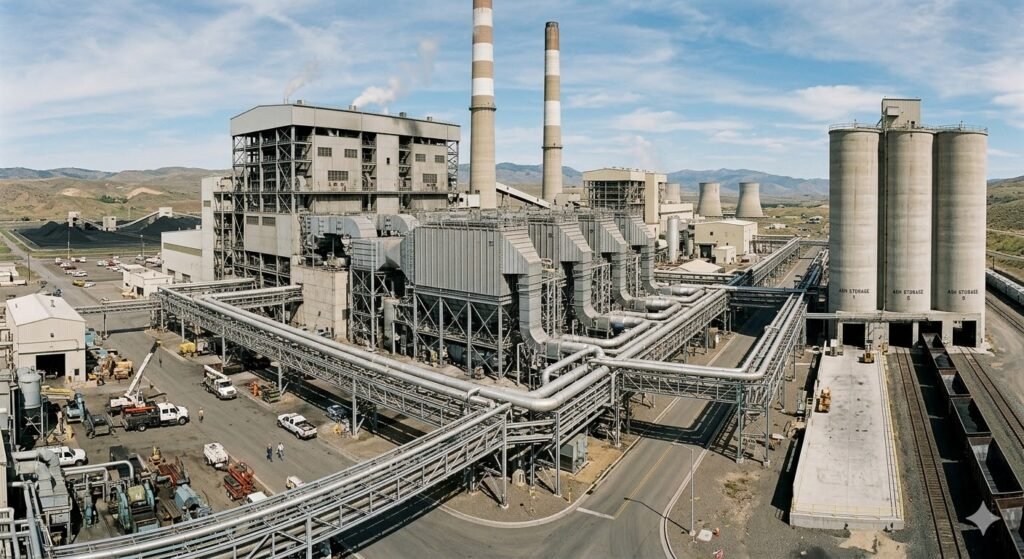
The Role of Roots Blowers in Fly Ash Pneumatic Conveying
Roots blowers, a type of positive displacement (PD) rotary lobe blower, are uniquely suitable for pneumatic conveying because they deliver a constant volume of air regardless of pressure variations in the pipeline. This characteristic is essential when moving fly ash, which varies in bulk density and flowability depending on coal source and combustion conditions.
Understanding Positive Displacement in Ash Transport
Unlike centrifugal blowers, which experience “surging” when back-pressure rises, a Roots blower maintains steady airflow. It traps a fixed volume of air between the rotors and the housing, then discharges it against the system pressure. This allows the blower to push ash through long piping runs, around bends, and up into silos without losing conveying velocity.
Lean Phase vs. Dense Phase Conveying
Usually power plants use two primary conveying methods:
- Lean (Dilute) Phase: Ash is suspended in high-velocity air (typically 15–25 m/s) and carried to the silo. Roots blowers are commonly used here, providing the high volume of air required.
- Dense Phase: Ash is moved in slugs at lower velocity but higher pressure. While screw compressors are sometimes used, heavy-duty Roots blowers arranged in series or with specialized valving can also handle these demanding applications.
In both configurations, the reliability of the blower directly determines the reliability of the ash removal process.
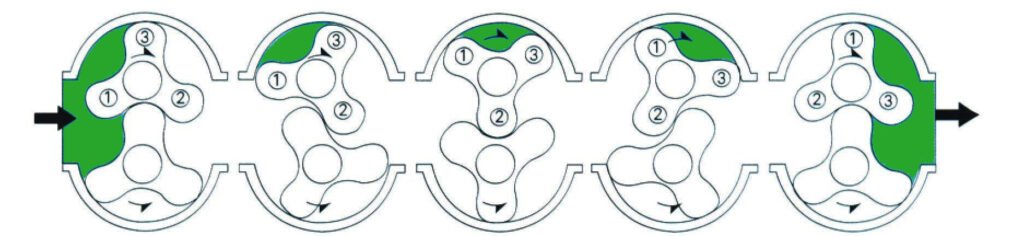
Roots blowers use precision-machined rotors to deliver a constant volume of air, making them ideal for handling pressure fluctuations in ash conveying lines.
5 Reasons Why Reliability is Non-Negotiable
In a power plant, a blower is not a standalone piece of equipment; it is a critical link in a chain that includes boiler operation, emissions control, and regulatory compliance. Here are five reasons why reliability in this role is absolute.
1. Continuous Operation and Load Fluctuations
Power plants operate 24 hours a day, 7 days a week. It will generate Fly ash continuously, and the conveying system must keep pace. A Roots blower must handle variable loads—from partial flow during low boiler output to full capacity during peak demand—without overheating or suffering fatigue. Frequent start-stop cycles, often controlled by level switches in ash hoppers, demand robust motor starting capabilities and thermal stability.
2. Overcoming High Pressure Drops
Long-distance conveying is common in large plants where silos may be located hundreds of meters from the boiler. Pressure drops occur due to:
- Friction in straight piping.
- Resistance at bends and elbows.
- The static head required to lift ash to silo tops.
A reliable Roots blower must generate consistent pressure (often 8–15 psig or higher) to overcome these losses without stalling or losing prime.
3. Durability Against Abrasive Environments
Fly ash is composed primarily of silica and alumina—highly abrasive materials. Even with filtration, fine dust inevitably reaches the blower. Standard industrial blowers with basic lip seals will fail quickly in this environment. High-performance fly ash blowers feature:
- Labyrinth seals with purge ports to inject clean air and repel dust.
- Hard-coated rotors and wear-resistant casing liners to minimize erosion.
- Heavy-duty bearings with L10 life ratings suitable for continuous duty.
4. Energy Efficiency and Operational Costs (OPEX)
Blowers are among the largest auxiliary power consumers in a coal plant. A poorly matched or inefficient blower can add hundreds of thousands of dollars annually in electricity costs. Reliability also means efficiency: precision-machined rotors minimize internal slip (recirculation), and integration with Variable Frequency Drives (VFDs) allows the blower to match air volume to actual demand, reducing energy waste during low-load periods.
5. Environmental Compliance and Dust Control
Leaks or ruptures in the conveying system—often triggered by pressure surges from an unstable blower—release fugitive dust. This not only creates unsafe working conditions but also risks violating particulate emission limits. A reliable Roots blower maintains stable pressure and vacuum, ensuring that the system remains sealed and that dust is contained from ESP to silo.
[Insert Image Here: A graph showing pressure vs. flow curves for a Roots blower versus a centrifugal blower, highlighting the stable flow characteristic of the PD blower under varying pressure. Caption: Figure 3: Positive displacement blowers maintain consistent flow despite pressure fluctuations, a key advantage in fly ash conveying. ]
Key Features of a High-Performance Fly Ash Roots Blowers
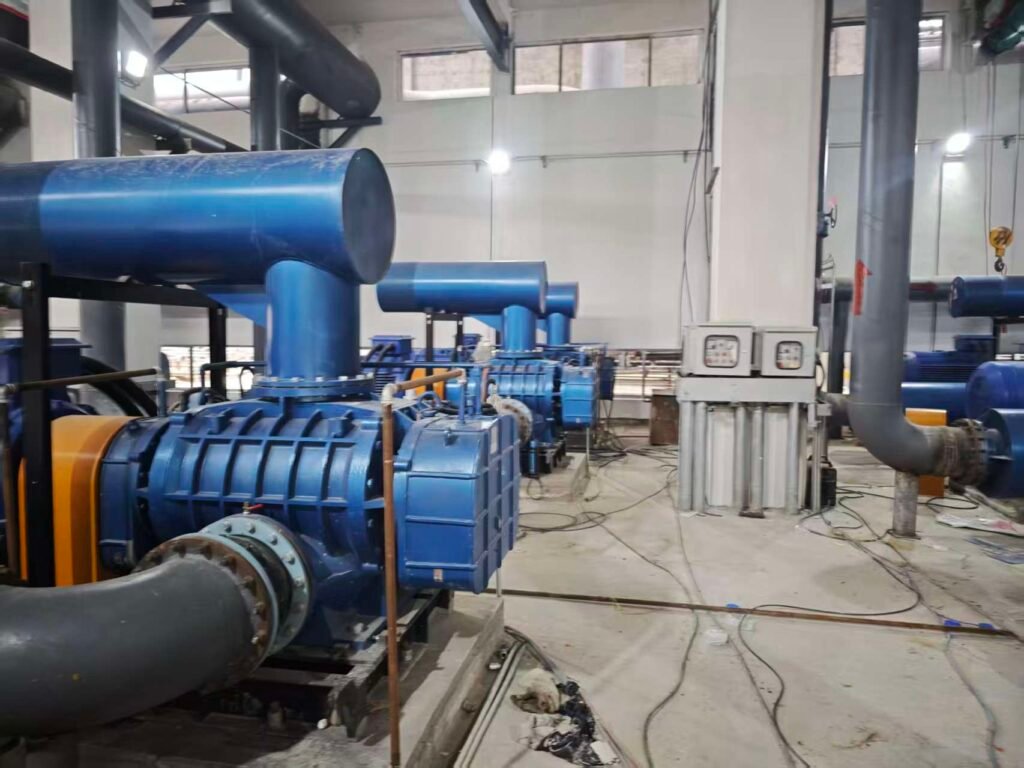
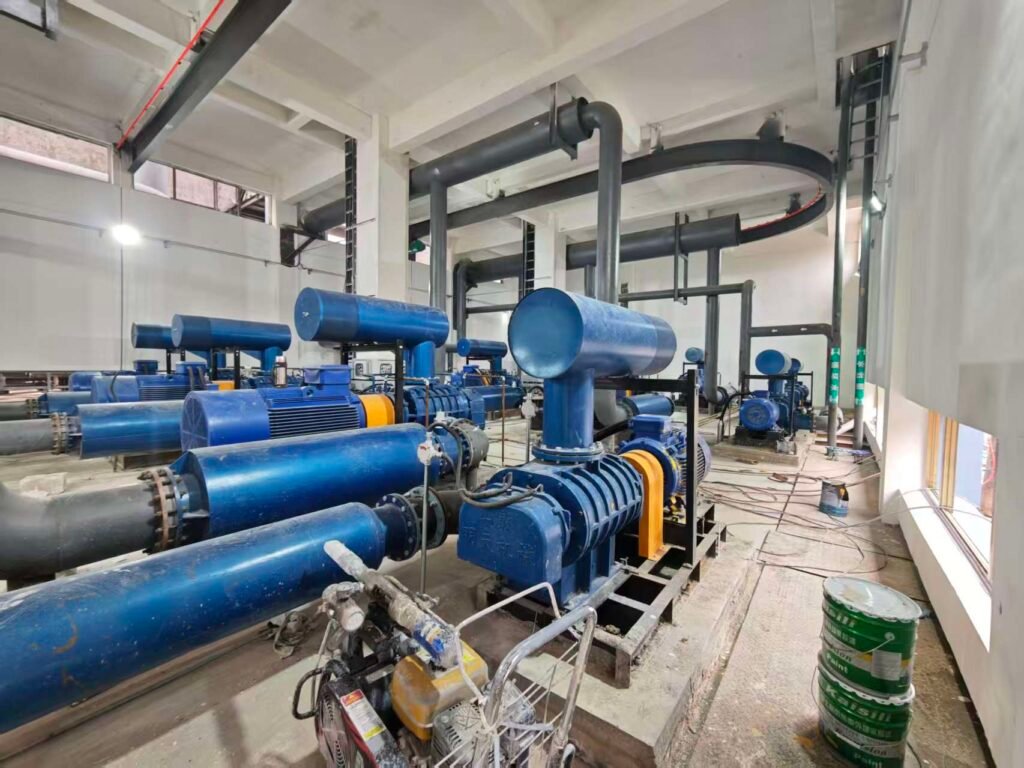
When evaluating Roots blowers for fly ash service, plant engineers should prioritize designs that address the specific demands of abrasive, continuous-duty operation. Key features to look for include:
- Heavy-Duty Bearings and Timing Gears: Oversized, heat-treated gears ensure precise rotor timing, preventing contact even under high pressure. Bearings should be rated for L10 life exceeding 100,000 hours in industrial environments.
- Advanced Cooling Systems: Depending on ambient conditions and operating pressure, choose between air-cooled or water-cooled designs. Water-cooled blowers offer superior thermal stability for high-pressure applications common in dense phase conveying.
- Vibration Monitoring and Noise Reduction: Integrated accelerometers allow connection to plant DCS systems for predictive maintenance. Factory-engineered silencers on inlet and discharge reduce noise to safe levels for personnel working near the blower package.
- Precision-Machined Impellers: Tighter clearances between rotors and the casing reduce internal slip, improving volumetric efficiency and lowering energy consumption. Hard coatings (such as nickel or ceramic) add resistance to abrasive dust that bypasses seals.
Maintenance Strategies to Extend Blower Lifespan
Even the most robust Roots blower requires a disciplined maintenance program to achieve its maximum service life in fly ash handling. Plant maintenance teams can focus on two critical areas:
1. Filtration: The First Line of Defense
The intake filter is the blower’s primary barrier against ash and ambient dust. Engineers should:
- Monitor differential pressure across the filter.
- Replace filter elements before pressure drop exceeds manufacturer specifications (typically 10–15 inches of water column).
- Use high-efficiency filters (e.g., HEPA or near-HEPA ratings) in dusty environments to minimize particulate ingress.
2. Lubrication and Thermal Management
Proper lubrication prevents gear and bearing failure:
- Use the recommended synthetic or mineral oil grades, which maintain viscosity at the high operating temperatures typical in power plant environments.
- Follow oil change intervals based on hours of operation and oil analysis results, not calendar time alone.
- For water-cooled units, ensure cooling water flow is uninterrupted and free of scaling to prevent overheating and oil degradation.
Predictive maintenance tools—such as vibration analysis, thermography, and oil sampling—allow teams to identify developing issues (bearing wear, imbalance, oil contamination) before they result in unplanned downtime.
Conclusion: Choosing the Right roots blowers for Fly Ash Management
The consequences of blower failure in a power plant extend far beyond the equipment room. Forced outages, environmental fines, and safety incidents all trace back to the reliability of the fly ash handling system.
Selecting a Roots blower based solely on upfront cost often leads to higher total cost of ownership through increased downtime, frequent repairs, and excessive energy consumption. Instead, plant managers and procurement teams should evaluate blowers based on:
- Proven durability in abrasive, high-duty-cycle applications.
- Engineering features such as advanced sealing, heavy-duty bearings, and monitoring integration.
- After-sales support including technical documentation, parts availability, and application engineering expertise.
By investing in reliable, purpose-engineered Roots blowers, power plants can ensure continuous ash removal, maintain boiler uptime, and operate confidently within environmental regulations.