
In the demanding world of industrial gas handling, few choices are as critical as the material of construction for your Roots blower. While factors like flow rate and pressure are essential, the material is the ultimate guardian of longevity. Selecting the “standard” option for a corrosive environment is a direct path to premature, costly failure and unplanned downtime. This guide pits the common contenders—Standard Cast Iron, Nickel-Plated Cast Iron, SS304/316, and Duplex SS2205—against each other, helping you make an informed decision that balances initial capital expenditure (CAPEX) against decades of reliable service.
1. Cast Iron Roots Blowers: The Industry Standard
Standard Cast Iron (HT250/GG25): This is the workhorse of the industry, offering excellent strength and wear resistance for dry, non-corrosive air applications like pneumatic conveying or combustion air. Its primary advantage is cost-effectiveness. However, its Achilles’ heel is corrosion.
The “Corrosion Gap”: Cast iron is highly susceptible to rust in high-humidity environments and offers minimal resistance to acidic or alkaline gases. Exposure leads to rapid pitting and degradation of the casing and rotors, compromising performance and seal integrity.
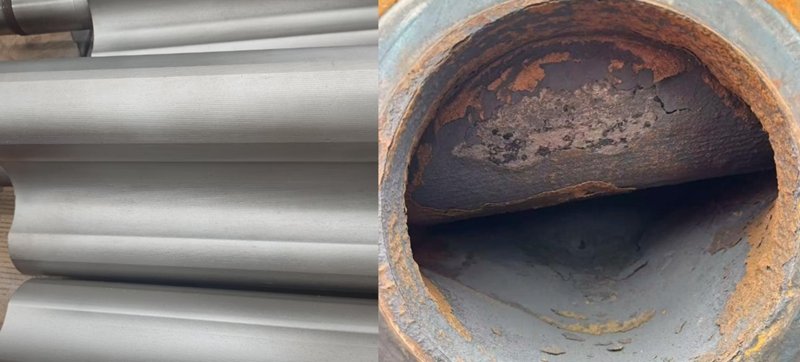
Cast Iron with Nickel Plating: This is an attempted bridge over the corrosion gap. Through an electroless nickel plating process, a protective layer is applied to the cast iron surfaces.
- How it works: The plating acts as a physical barrier against moisture and mild chemical attack.
- Pros: More cost-effective than a full stainless steel blower, suitable for mildly humid or food-grade (non-acidic) environments.
- Cons: The protection is only skin-deep. The primary risk is “pinhole” or galvanic corrosion if the plating is scratched, chipped, or worn during operation or maintenance, which can accelerate the underlying cast iron’s failure.
2. Stainless Steel Roots Blowers: Beyond Surface Protection
For truly corrosive environments, stainless steel provides inherent, bulk material resistance.
SS304 vs. SS316:
- SS304: A good step up from plated materials, offering solid resistance to oxidation and basic moisture. However, it is vulnerable to pitting and crevice corrosion in environments containing chlorides (e.g., saltwater mist, some chemical processes).
- SS316: Often called the “Marine Grade” standard, SS316 is the most common choice for corrosive applications. The addition of molybdenum significantly enhances its resistance to a wide range of acids, chlorides, and industrial atmospheres. It is the default recommendation for wastewater treatment aeration, many chemical gases, and general harsh environments.
SS2205 (Duplex Stainless Steel): This is the heavyweight champion for extreme conditions.
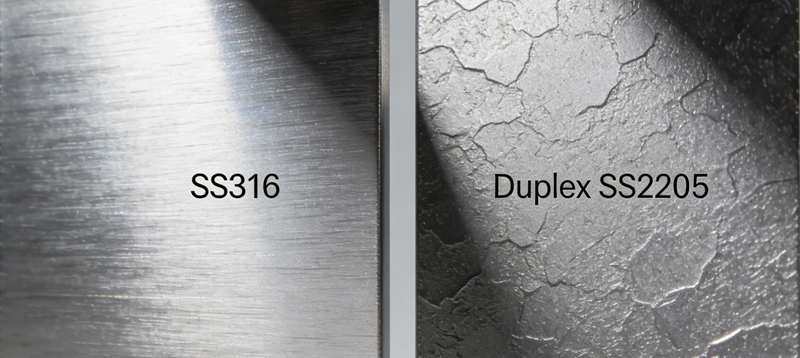
- The Premium Solution: Duplex steel has a mixed microstructure, granting it roughly twice the yield strength of standard stainless grades.
- Superior Resistance: It offers exceptional resistance to stress corrosion cracking (SCC), pitting, and erosion. This makes it ideal for the most aggressive applications, such as handling concentrated chemical vapors, in desalination plants, or for harsh industrial wastewater streams.
3. Performance Comparison Table-Roots Blower Material
| Material | Corrosion Resistance | Durability in Harsh Environments | Relative Cost | Best For |
|---|---|---|---|---|
| Cast Iron | Low | Low | $ | Dry air, pneumatic conveying, non-corrosive gases |
| Nickel-Plated CI | Moderate | Moderate | $$ | Mild humidity, food-grade air (non-acidic), limited budgets |
| SS304/316 | High | High | $$$ | Chemical processing, marine air |
| SS2205 (Duplex) | Extreme | Very High | $$$$ | Desalination, highly acidic/alkaline processes, high-chloride environments |
4. Key Factors to Consider Before Buying
Chemical Composition of the Gas
The most critical factor. Is the gas acidic (e.g., HCl, H₂SO₄, H₂S), alkaline, or neutral? Are chlorides, solvents, or abrasive particulates present? A full chemical analysis is the best starting point.
Operating Temperature & Pressure
Temperature dramatically accelerates corrosion rates. A mildly corrosive gas at ambient temperature can become highly aggressive at elevated temperatures. Higher pressures also place greater stress on materials, making the strength of duplex steels advantageous.
Total Cost of Ownership (TCO)
Look beyond the initial price tag. A “cheap” cast iron blower failing every 12-18 months in a corrosive setting incurs repeated costs for replacement, downtime, and labor. An “expensive” SS2205 blower with a lifespan of 10+ years often presents a far lower TCO and unmatched operational reliability.
5. Maintenance Tips for Corrosive Applications
- Specialized Seals: Even with a stainless steel blower, the seals are critical. Specify double mechanical seals with compatible flush plans to prevent corrosive ingress at the shaft.
- Regular Flushing: Implement a regular cleaning or flushing protocol (if the process allows) to prevent the buildup of corrosive sediments or salts on the rotor surfaces.
- Inspection Routine: Establish a visual and performance inspection schedule to catch any signs of wear or early-stage corrosion promptly.

Conclusion: Which Roots Blower Material Wins?
There is no universal winner—only the optimal material for your specific environment.
- For dry, clean air: Standard Cast Iron remains the cost-effective choice.
- For mild humidity or budget constraints: Nickel-Plated Cast Iron offers a compromise, with caution.
- For most industrial corrosive applications (chemical, marine): SS316 is the proven, reliable workhorse.
- For extreme conditions with chlorides, high acids, or requiring maximum strength: Duplex SS2205 is the premium, long-term investment.
Your Roots Blower Material selection should be dictated by the Severity of the Environment. When in doubt, consulting with a blower manufacturer’s engineering team with your specific process data is the safest path to a durable, efficient solution.
FAQ Section
Q: Can I use a cast iron blower for hydrogen sulfide (H₂S) gas?
A: Generally, no. H₂S, especially when moist, is highly corrosive and will rapidly attack cast iron and nickel plating. SS316 or, preferably, Duplex SS2205 is recommended for such services due to their superior resistance to sulfide stress cracking.
Q: What is the lead time difference for Stainless Steel blowers compared to standard ones?
A: Stainless steel blowers, particularly those built with duplex steel (SS2205), often have longer lead times. This is due to the specialized sourcing of raw materials, more intricate machining requirements, and potentially custom manufacturing processes. Planning ahead is crucial.
Q: Is external painting sufficient to protect a cast iron blower from corrosion?
A: No. External protection does not guard the internal wetted parts—the rotors and casing interior—which are in direct contact with the process gas. Internal corrosion is the primary failure mode.
Q: How does temperature affect roots blower material choice?
A: As temperature increases, the corrosion rate can increase exponentially. A material like SS304 might be adequate for a mild chloride environment at room temperature but could fail quickly at 80°C. Higher temperatures often necessitate an upgrade to SS316 or Duplex.