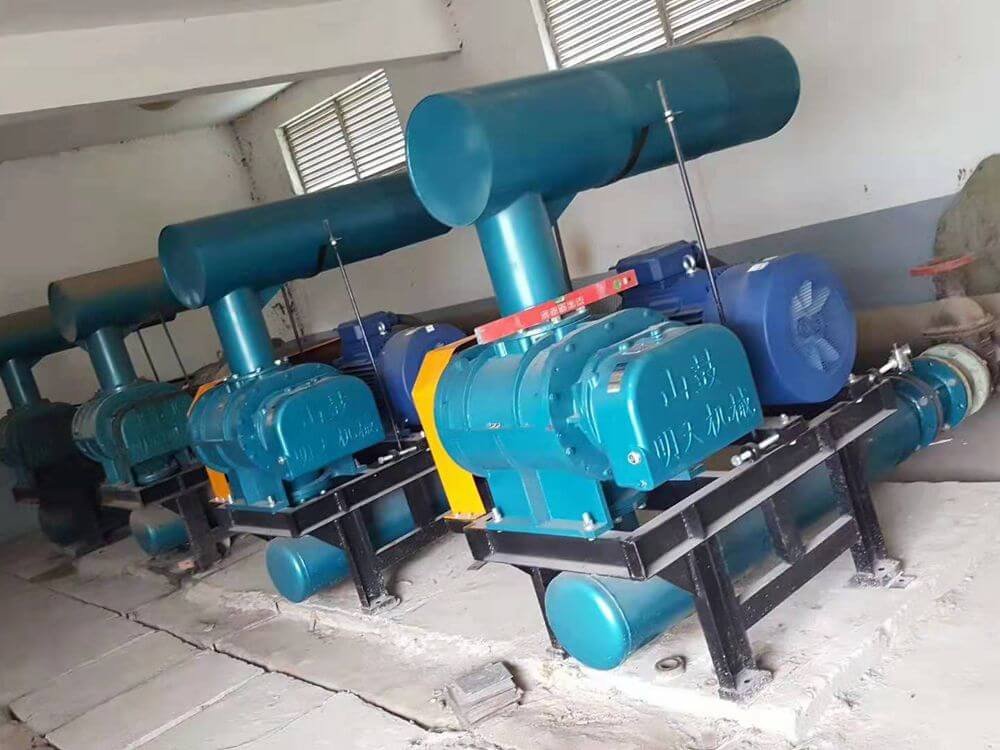
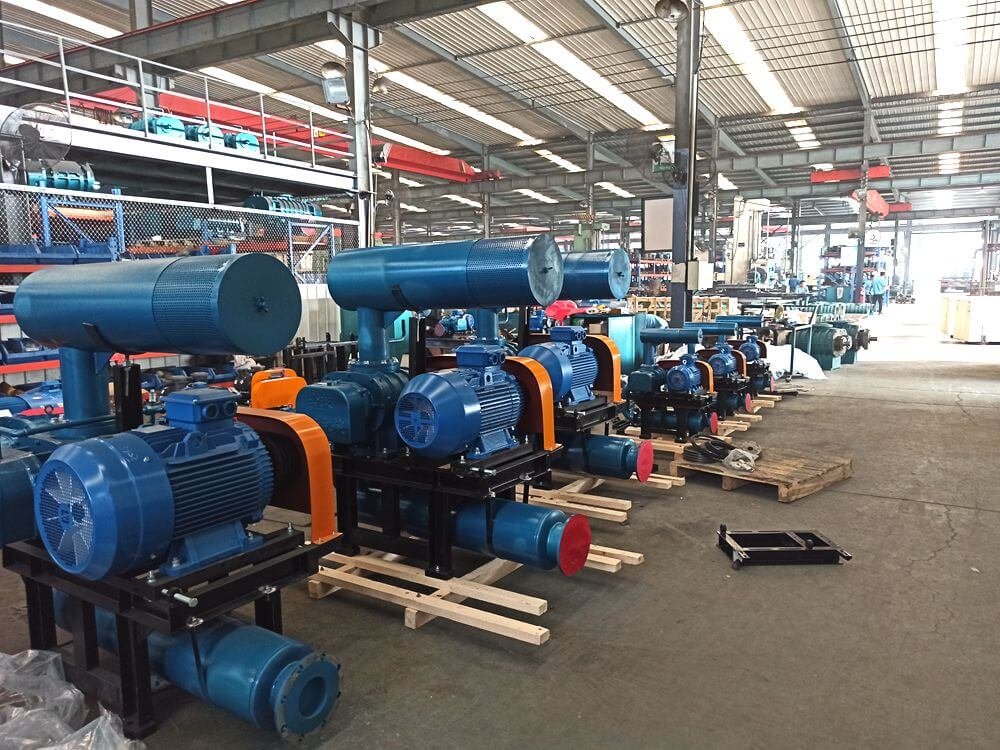
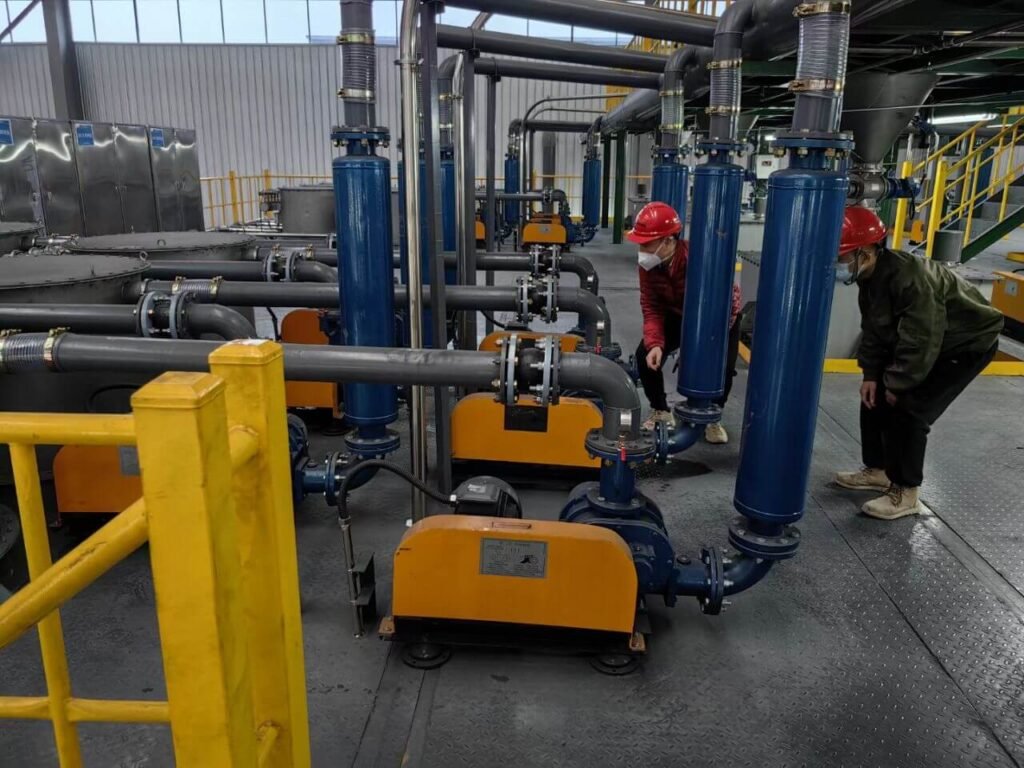
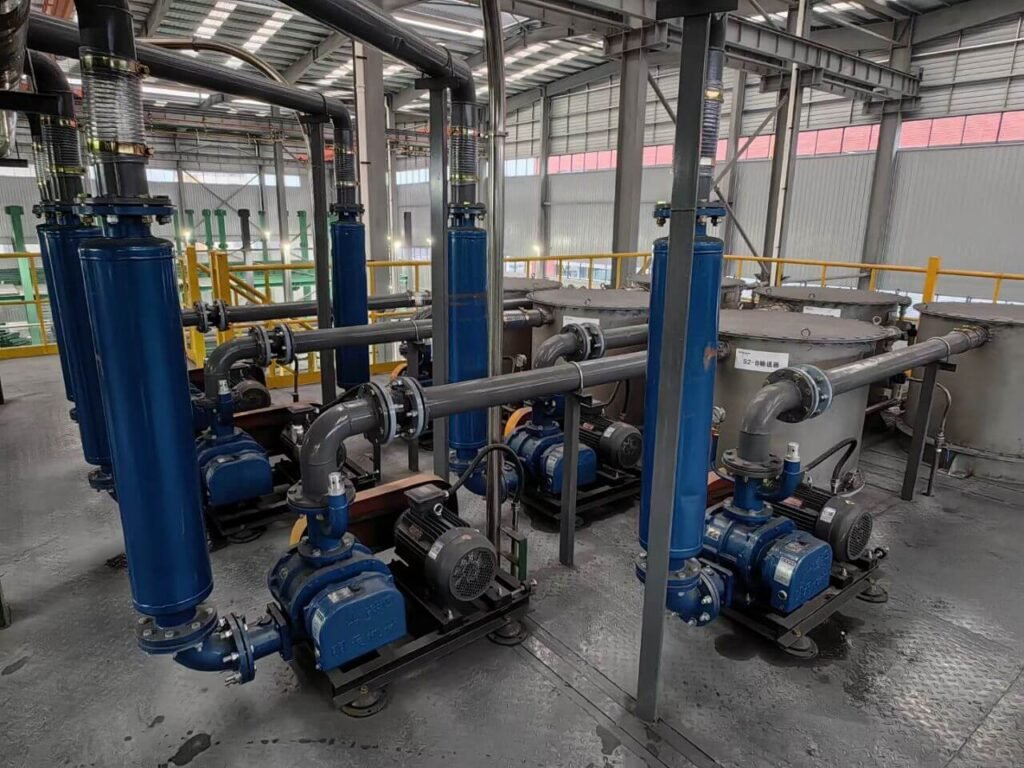
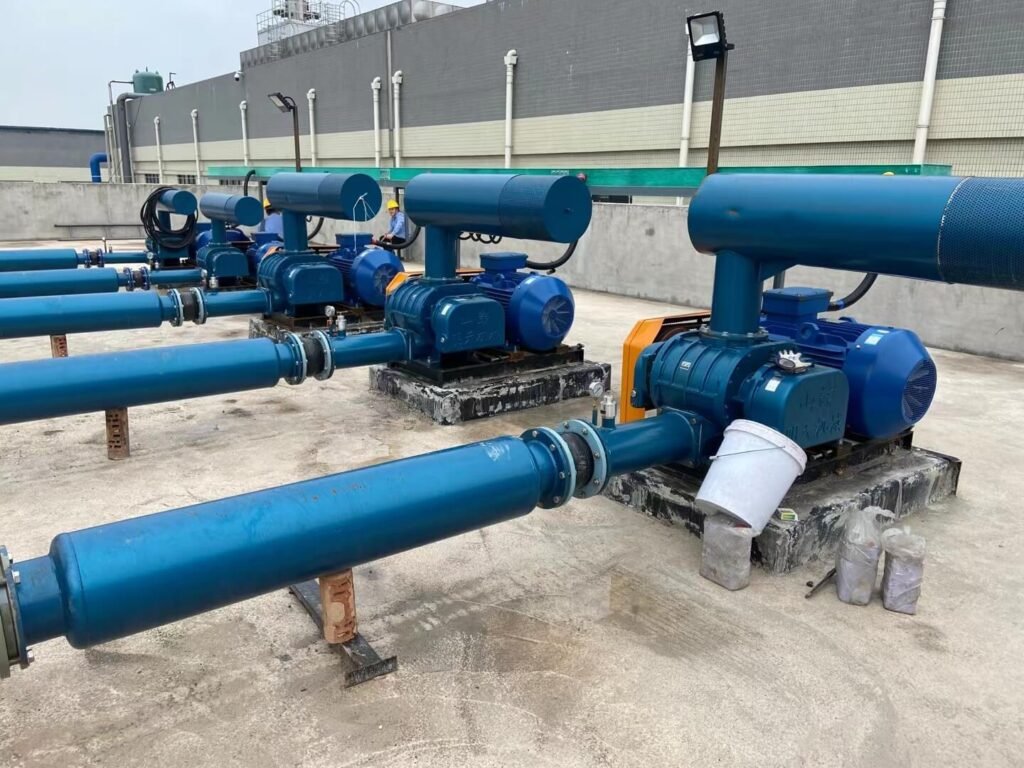
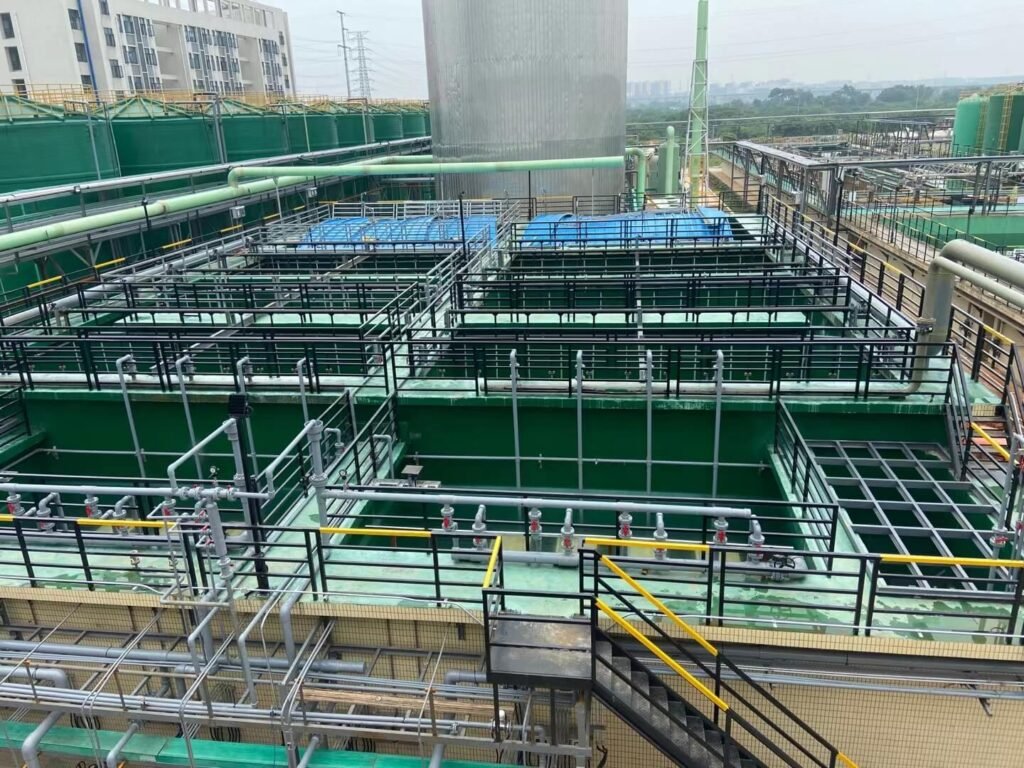
Modern textile manufacturing and dyeing plants operate in demanding environments where air quality, process consistency, and energy costs directly impact profitability. From transporting raw cotton fibers to aerating highly contaminated dyehouse effluent, a reliable source of low-pressure, high-volume air is essential. This is where the Roots blower (a positive displacement blower) has become an industry standard for Textile Manufacturing Plant.
Unlike centrifugal fans or high-pressure compressors, Roots blowers deliver a steady, pulse-free airflow across a wide pressure range, making them ideal for textile-specific applications. Their simple, robust design ensures continuous operation – often 24/7 – with minimal maintenance.
“In the textile industry, a Roots blower is primarily used for pneumatic conveying of fibers, fabric drying, centralized vacuum cleaning, agitation of dye liquors, and – most critically – biological aeration in wastewater treatment plants (ETP). Its oil-free, energy-efficient operation protects fabric quality and reduces production costs.”
Because air compression often accounts for 15–30% of a textile mill’s electricity bill, selecting the right blower technology directly influences your bottom line.
Core Applications of Roots Blower in Textile Manufacturing
1. Pneumatic Conveying of Raw Materials (Fiber Transport)
Moving raw cotton, wool, or synthetic fibers from bale openers to carding machines poses two challenges: preventing clogging and avoiding contamination. Mechanical conveyors (belts, screws) can generate dust and cause fiber breakage. Roots blowers solve this by creating a high-velocity airstream that carries loose fibers through sealed pipelines.
How it works: The blower pushes or pulls air at 0.3–0.8 bar(g), entraining fibers in a dilute-phase flow.
Benefits:
Eliminates material blockages in bends and hoses.
Reduces fiber fly and lint accumulation.
Minimizes foreign particle contamination (e.g., oil, grease from mechanical parts).
For pneumatic conveying in textile manufacturing, Roots blowers offer the optimal balance of air volume and pressure without overheating the fibers.
2. Yarn and Fabric Drying Processes
After washing, bleaching, or dyeing, textiles retain significant moisture that must be removed efficiently before stentering or finishing. High-flow, low-pressure air accelerates evaporation without damaging delicate fibers.
Roots blowers are commonly paired with:
Slitting nozzles (to open tubular fabrics)
Air knives (to blow water off flat surfaces)
Suction drums (to extract water from yarn packages)
Benefits for drying:
Uniform moisture profile across the fabric width.
Reduced drying time in downstream hot flues (saving thermal energy).
No risk of oil stains – critical for white or pastel fabrics.
3. Centralized Vacuum Cleaning Systems
Spinning and weaving mills generate enormous amounts of lint, dust, and fly waste. Accumulated combustive dust poses a fire/explosion hazard (especially in cotton mills) and compromises product quality. A centralized vacuum system powered by a Roots blower (operating in suction mode) collects waste from multiple machines simultaneously.
Advantages over portable vacuums:
Continuous, hands-off operation.
Reduced manual cleaning labor.
Improved indoor air quality and worker safety (compliant with NFPA combustible dust standards).
Energy-efficient Roots blower for textiles with VFD control can modulate suction power based on real-time waste generation, saving electricity during low-production shifts.
Critical Role of Roots Blowers in the Dyeing and Finishing Sector
Dyeing and finishing are water- and chemical-intensive stages. Here, Roots blowers contribute both to production quality and environmental compliance.
Dyehouse effluent contains residual dyes, surfactants, salts, and organic chemicals that cannot be discharged untreated. Most textile ETPs use a biological treatment stage (activated sludge process) where aerobic microorganisms break down pollutants. Roots blowers supply the essential oxygen through fine-bubble diffusers in aeration tanks.
Why this is critical:
Dyeing plants often have the highest energy consumption in aeration – typically 60–80% of the ETP’s power budget.
Inefficient blowers lead to poor biological oxygen demand (BOD/COD) removal, risking regulatory fines.
Key requirement: Corrosion-resistant coatings (e.g., epoxy or stainless steel rotors) because hydrogen sulfide and moisture in ETP atmospheres can damage standard blowers.
Dyeing plant effluent aeration demands blowers that can operate 24/7 under high humidity and variable dissolved oxygen setpoints. A VFD-controlled Roots blower matches airflow to microbial demand, cutting energy by 30–50%.
2. Agitation of Dye Liquors and Chemical Tanks
Mechanical agitators (paddles, propellers) can create vortexes, introduce air bubbles unevenly, or risk damaging sensitive fabric batches. Roots blowers provide an alternative: oil-free compressed air injected into dye tanks or chemical make-up stations generates gentle, turbulent mixing.
Benefits:
Prevents sedimentation of heavy dye particles or hydroscopic chemicals.
Ensures consistent color reproduction across batches (no concentration gradients).
No moving parts inside the tank – easy maintenance and no contamination risk.
Note: Use an air filter on the blower intake to prevent lint or dust from entering the dye liquor.
3. Fabric Suction and De-watering
Before dyed or washed fabric enters the stenter (tenter frame) for heat-setting, excess surface water must be removed to avoid energy waste and uneven finishing. A Roots blower configured as a vacuum pump (inlet under negative pressure) pulls water through a suction slot or perforated drum.
Typical setup:
Fabric passes over a slotted vacuum extractor.
Roots blower creates 0.4–0.6 bar(g) vacuum.
Removed water is collected and returned to the wash bath (saving water and chemicals).
Result: Lower moisture pickup reduces stenter gas/electricity consumption by 15–25%.
Key Advantages of Choosing Roots Blower for Textile Manufacturing Mills
1) 100% Oil-Free Air Delivery
Textiles are highly sensitive to oil mist or aerosol. Even microscopic oil droplets can cause:
Yellowing of white fabrics.
Uneven dye uptake (resist spots).
Adhesion problems in nonwovens or coated textiles.
Roots blowers are oil-free in the compression chamber (no lubricant contacts the rotors or housing). This guarantees ISO 8573-1 Class 0 air quality – essential for dyeing, drying, and pneumatic conveying.
2) Heavy-Duty Reliability and Continuous Operation (24/7)
Timing gears that maintain rotor clearance without contact.
Heavy-duty bearings rated for L10 life >100,000 hours.
Simple field maintenance (no complex impeller balancing).
Even in humid, lint-laden environments, proper intake filtration keeps them running for years.
3) Energy Efficiency and Cost-Effectiveness
For low-pressure applications (0.3–1.0 bar(g)), using a high-pressure screw compressor is like “driving a truck to deliver groceries” – hugely inefficient. Roots blowers are designed specifically for this pressure range, offering:
Higher volumetric efficiency than centrifugal fans at low pressures.
Ability to operate with variable frequency drives (VFD) to match load.
Potential for heat recovery (hot discharge air can be used for space heating in winter).
Energy-efficient Roots blower for textiles can reduce a mill’s compressed air electricity bill by 40–60% compared to using screw compressors with pressure reducers.
Selection Criteria: How to Choose the Right Roots Blower for Your Textile Manufacturing Plant
When evaluating models from different manufacturers, consider the following:
ETP aeration: 0.3–0.6 bar(g), wide range depending on basin size
Vacuum de-watering: 0.5–0.7 bar(g) vacuum
Corrosion resistance
For dye chemical areas or ETP: specify blowers with epoxy-coated housing or stainless steel rotors.
Noise control
Indoor installation near work areas requires acoustic enclosures (can reduce 85+ dBA to below 75 dBA).
Intake silencers and flexible connections also help.
Variable Frequency Drive (VFD) compatibility
Essential for ETP aeration and vacuum systems where demand fluctuates. Ensure the blower manufacturer approves VFD operation across 40–100% speed range.
Air filtration
In lint-heavy spinning/weaving areas, install a two-stage intake filter (cyclone + cartridge) to prevent rotor jamming.
Conclusion-Roots Blower In Textile Manufacturing Mills
From the opening of raw cotton bales to the final discharge of treated dyehouse effluent, Roots blowers play an indispensable role in optimizing both production quality and environmental compliance in textile mills.
They enable dust-free fiber transport, uniform drying, and efficient vacuum cleaning.
In dyeing, they provide oil-free agitation, de-watering, and – most critically – biological aeration for wastewater treatment (often the single largest energy user in an ETP).
Their 100% oil-free, 24/7 reliable design protects fabric from stains and defects.
Choosing the right Roots blower – sized correctly, with corrosion protection and VFD capability – directly reduces your energy bills and maintenance headaches.