
In wet limestone-gypsum flue gas desulfurization (FGD) systems, the oxidation blower is not merely an auxiliary component—it is the engine that drives the complete chemical conversion of harmful sulfur dioxide into marketable gypsum. For EPC contractors, power plant engineers, and procurement professionals, selecting the right FGD Roots blower directly impacts system efficiency, byproduct quality, and long-term operating costs.
This guide provides a comprehensive technical overview of FGD Roots blowers, covering their working principles, critical design features, selection criteria, and comparative advantages over alternative blower technologies.
1: What is an FGD Roots Blower and How Does It Work?
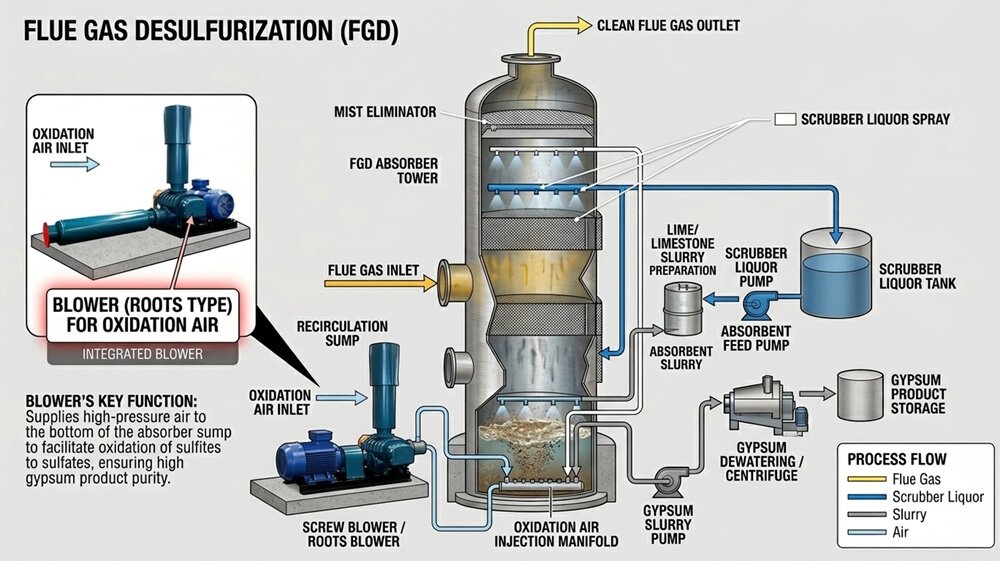
1.1: The Critical Role of Oxidation Air in Flue Gas Desulfurization (FGD)
In wet limestone-gypsum FGD—the dominant desulfurization technology used in over 90% of thermal power plants and steel mills worldwide—the oxidation blower serves a singularly important purpose: it provides the oxygen necessary to convert calcium sulfite (CaSO₃) into stable, commercially valuable gypsum (CaSO₄·2H₂O).
The chemical pathway is straightforward yet mission-critical. Flue gas containing sulfur dioxide (SO₂) is absorbed by limestone slurry in the absorber tower, forming calcium sulfite. Without sufficient oxidation, this intermediate compound remains unstable—reducing desulfurization efficiency and causing scaling inside equipment. The oxidation Roots blower injects atmospheric air into the slurry pool, providing the oxygen (O₂) that drives the complete oxidation of calcium sulfite into calcium sulfate, which then crystallizes into gypsum.
This process directly determines two outcomes that matter to every plant operator: desulfurization efficiency and byproduct quality. Insufficient oxidation leaves excessive calcium sulfite in the gypsum, compromising its value for building materials and other applications.
1.2: Key Working Principles of Roots Blowers in FGD Absorber Towers
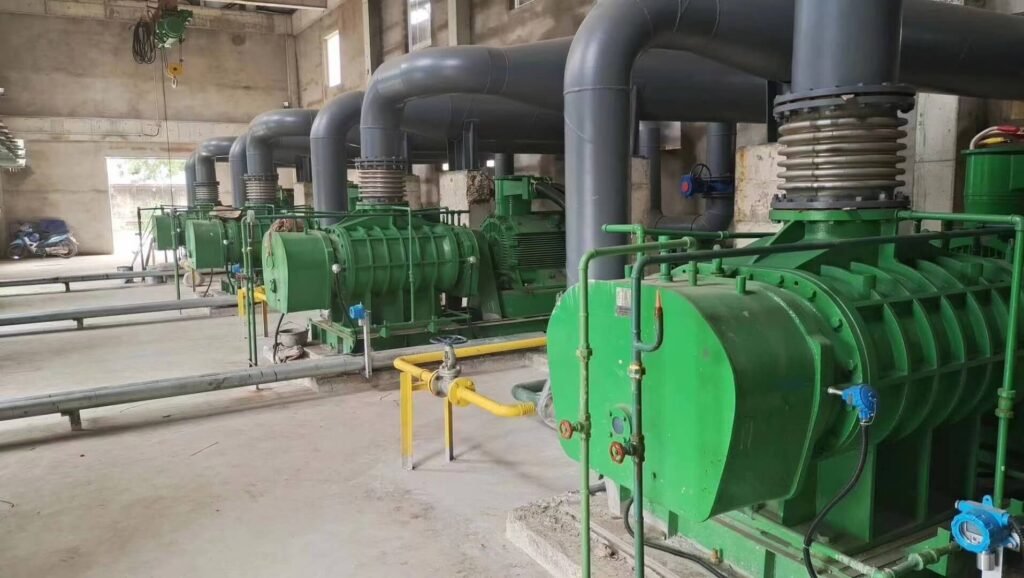
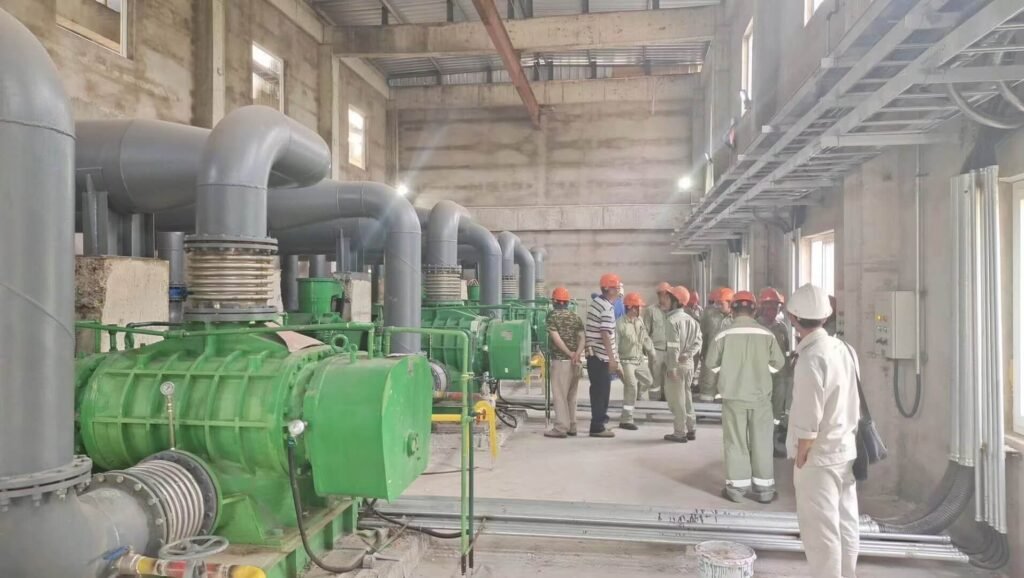
Roots blowers are positive displacement machines: two synchronized rotors (impellers) rotate in opposite directions within a housing, trapping and displacing a fixed volume of air with each revolution. This operating principle confers a decisive advantage in FGD applications.
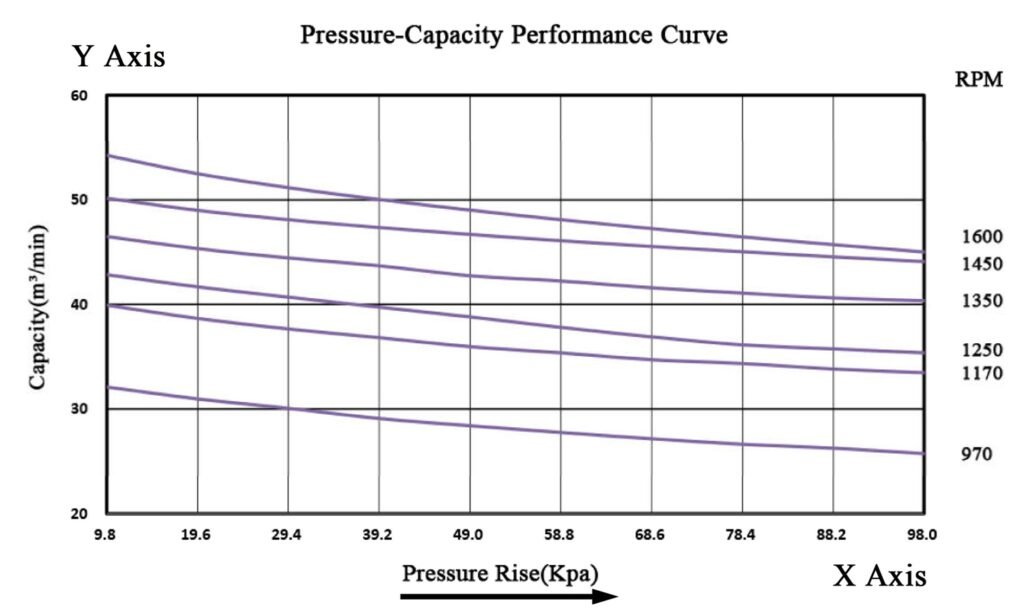
The output air volume of a Roots blower is virtually independent of system backpressure. In an absorber tower, slurry levels fluctuate continuously—yet the Roots blower maintains a constant, reliable oxygen supply regardless of the hydrostatic head it must overcome. This constant-flow characteristic ensures uninterrupted oxidation reactions even when system pressure varies.
Furthermore, Roots blowers can achieve single-stage pressure increases up to 98 kPa, with two-stage series configurations reaching 117.6 kPa to meet the demanding pressure requirements of deep-tower FGD processes.
2: Key Features Required for FGD Roots Blower in Harsh Environments
FGD systems operate under some of the most punishing conditions in industrial processing: hot, wet, acidic gases laden with particulate matter. A blower that performs adequately on a test bench may fail catastrophically within months when exposed to the actual gas chemistry of a scrubber system.
2.1: Heavy-Duty Design for 24/7 Continuous Operation
Power plants and industrial facilities run continuously—and so must their FGD systems. Oxidation blowers are among the three major energy-consuming devices in a typical FGD system, alongside booster fans and circulating slurry pumps. Any unplanned outage translates directly to lost production, regulatory non-compliance, and costly emergency repairs.
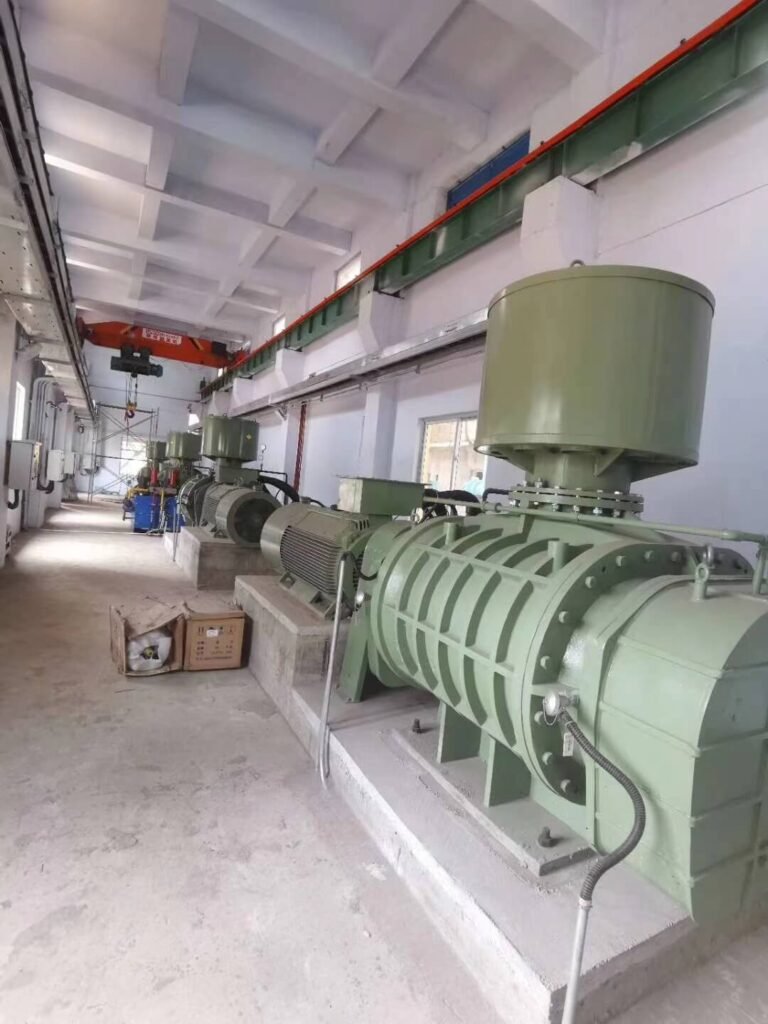
Heavy-duty FGD Roots blowers are engineered for round-the-clock service with features including:
- SKF, FAG, NSK, or NACHI bearings for extended service life
- Air-cooling capability up to 98 kPa pressure rise
- Oil-free design to prevent lubricant contamination of the slurry
- Simple, robust construction with no metal-to-metal contact between rotors and casing
2.2: Anti-Corrosion & Anti-Scaling Protection
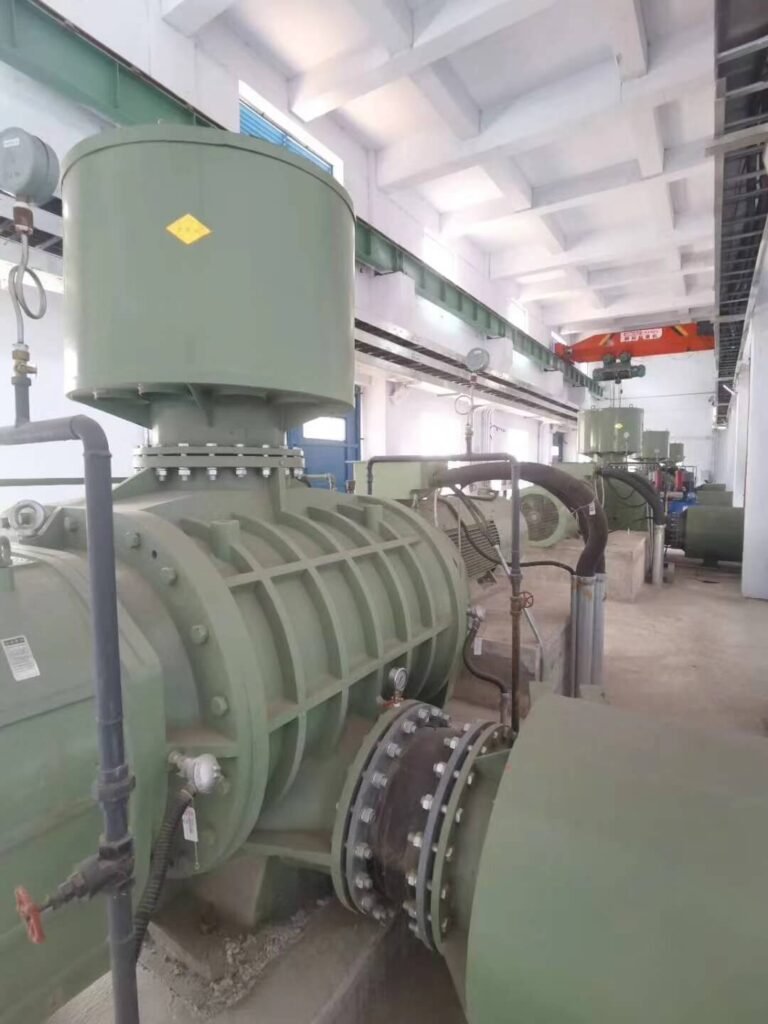
Corrosion is the single biggest threat to blower longevity in FGD service. Standard cast iron rotors can pit and corrode within 6 to 12 months when exposed to acidic gases and moisture. The gas stream in FGD systems contains SO₂, HCl, and other aggressive compounds that form acids upon contact with moisture.
Effective corrosion protection requires deliberate material selection:
| Material | Corrosion Resistance | Service Life in Corrosive Service |
|---|---|---|
| Cast iron | Poor | 6–12 months |
| 304 stainless steel | Moderate | Extended |
| 316L stainless steel | Good | 3–5 years |
| Hastelloy / Inconel | Excellent | 5–10 years |
Data source: Field experience in corrosive gas applications
Corrosion-resistant designs employ stainless steel (304, 316L, or special alloys), protective coatings (epoxy, PTFE), or both. Epoxy and PTFE coatings provide additional protection against chemical attack, while 316L stainless steel is the industry standard for corrosive service. For the most severe conditions, special alloys such as Hastelloy C-276 or Inconel 625 may be specified.
2.3: Precise Pressure Adaptability Against Variable Slurry Levels
The absorber tower slurry level is anything but static. As the liquid level rises, so does the hydrostatic backpressure against which the blower must deliver air. Centrifugal blowers—which produce airflow that varies inversely with pressure—struggle under these conditions.
Roots blowers, by contrast, deliver a fixed volume of air per revolution. This positive displacement characteristic means the blower maintains its rated airflow regardless of slurry level fluctuations, ensuring consistent oxidation performance even when tower conditions change.
3: FGD Roots Blower vs. Centrifugal / Turbo Blowers: Which One to Choose?
The selection between Roots blowers and centrifugal/turbo blowers is one of the most consequential decisions in FGD system design. Each technology has its strengths—and its limitations.
| Selection Criterion | Roots Blower (Positive Displacement) | Centrifugal / Turbo Blower |
|---|---|---|
| Flow Characteristic | Constant flow regardless of pressure | Flow decreases as pressure increases |
| Pressure Capability | 9.8–98 kPa (single stage); up to 117.6 kPa (two-stage) | 19.6–98 kPa (multi-stage); up to 200+ kPa (turbo) |
| Flow Range | 0.5–500+ m³/min | 20–1,000+ m³/min |
| Efficiency | ~65–75% | 75–85% (multi-stage); 80–90% (turbo) |
| Suitability for Pressure Fluctuations | Excellent—maintains flow | Poor—flow drops with backpressure |
| Initial Investment | Lower to moderate | Higher (especially turbo) |
| Maintenance Complexity | Simple—regular lubricant and seal replacement | More complex—high-speed rotating components |
| Best Application | High backpressure, variable slurry levels, small-to-medium capacity | High flow, stable pressure, large-scale installations |
3.1: When to Select a Roots Blower over a Single-Stage Turbo Blower?
Roots blowers are the preferred choice when:
- System backpressure is high and variable—the positive displacement characteristic ensures reliable airflow regardless of slurry level fluctuations
- The project is small-to-medium scale—Roots blowers offer a compelling cost-to-performance ratio
- Budget constraints exist—lower initial investment with predictable maintenance costs
- Proven reliability is paramount—the simple, robust design has decades of field validation in FGD service
While centrifugal and turbo blowers offer higher efficiency and greater flow capacity, they are often unsuitable for applications requiring high pressure head, as their smaller impeller diameters struggle to achieve the necessary pressure. Moreover, centrifugal blowers cannot maintain stable airflow when system pressure fluctuates.
For many FGD installations—particularly in retrofit projects, smaller power plants, and industrial applications—the Roots blower remains the optimal choice.
4: Key Technical Specifications for FGD Roots Blower Selection
Selecting the correct FGD Roots blower requires careful attention to several critical parameters. The following specifications represent the minimum information required for a proper selection.
4.1: Calculating Air Volume and Pressure Rise (kPa)
Air Volume (Flow Rate): The required airflow is determined by the FGD system’s SO₂ loading, which depends on flue gas flow rate and inlet SO₂ concentration. Typical FGD Roots blowers cover flow ranges from 4.5 to 267 m³/min, with larger models available.
Pressure Rise: The blower must overcome:
- The hydrostatic head of the slurry in the absorber tower
- Pressure drop through the air distribution system (lances, sparge pipes)
- System backpressure from the slurry
Standard FGD Roots blowers offer pressure capabilities from 9.8 to 98 kPa. For deeper towers or more demanding applications, two-stage configurations can achieve up to 117.6 kPa.
4.2: Sealing & Cooling Methods (Air-Cooled vs. Water-Cooled)
Sealing: The seal between the blower and the atmosphere is critical in FGD applications, where leakage of corrosive gases must be prevented. Mechanical seals or mechanical packing are standard options. In nickel-plated or corrosion-resistant configurations, metal bellows may be specified for enhanced durability.
Cooling: Air-cooled designs are common for pressure rises up to 98 kPa. For higher pressures or more demanding duty cycles, water-cooled configurations may be required to maintain optimal operating temperatures and extend bearing life.
4.3: Motor & Frequency Inverter (VFD) Matching for Energy Saving
Motor power for FGD Roots blowers typically ranges from 30 to 355 kW, depending on the flow and pressure requirements.
Variable Frequency Drive (VFD) integration is increasingly standard in modern FGD installations. A VFD allows the blower to dynamically adjust airflow based on actual system load—reducing energy consumption during partial-load operation while maintaining oxidation performance when demand is high. Given that oxidation blowers can consume 20% to 30% of the total electricity used in an FGD system, VFD-enabled energy savings translate directly to lower operating costs.
5: Common Applications of FGD Roots Blowers
FGD Roots blowers serve critical oxidation functions across multiple industrial sectors where sulfur oxide emissions must be controlled.
5.1: Thermal Power Plants & Coal-Fired Boilers
Coal-fired power plants are the largest application segment for FGD systems. The wet limestone-gypsum process dominates this sector, with Roots blowers providing forced oxidation air to absorber towers. These installations demand 24/7 reliability, corrosion resistance, and the ability to handle variable load conditions as plant output fluctuates.
5.2: Steel & Cement Plant Exhaust Gas Treatment
Steel mills and cement plants generate significant SO₂ emissions from their combustion and process operations. FGD systems in these facilities often face additional challenges: higher particulate loading, more variable gas compositions, and space constraints that favor the compact footprint of Roots blowers.
5.3: Chemical & Petrochemical Refineries
Chemical processing and petroleum refining operations produce sulfur-bearing off-gases that require treatment before atmospheric release. FGD Roots blowers in these applications may need additional corrosion protection due to the presence of aggressive chemical vapors.
6: Why Partner with Shangu brand for Your FGD Project?
Selecting an FGD Roots blower is not merely a procurement decision—it is an engineering partnership that affects system performance for decades. The right supplier brings not just equipment, but deep application expertise and a commitment to quality.
6.1: Custom Engineering & Material Options
Every FGD system is unique. Gas composition, temperature profiles, humidity levels, and duty cycles vary significantly across installations. [Your Brand Name] offers:
- Tailored material selection—from standard cast iron to 316L stainless steel, Hastelloy, and Inconel alloys
- Protective coating options—epoxy, PTFE, and nickel-phosphorus alloy plating
- Custom sealing configurations—mechanical seals, packing, or metal bellows to match your specific gas chemistry
- VFD integration—for energy-optimized operation across your full load range
6.2: Strict Quality Control and Global Export Experience
With decades of manufacturing expertise in FGD and chemical scrubber applications, Shangu Brand brings:
- Proven reliability—field-validated designs that withstand hot, wet, acidic operating conditions
- Global export capability—equipment shipped and commissioned across multiple continents
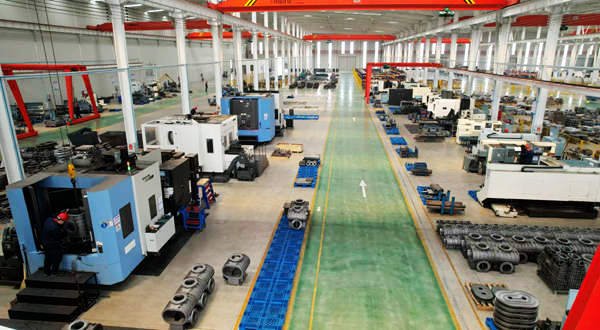
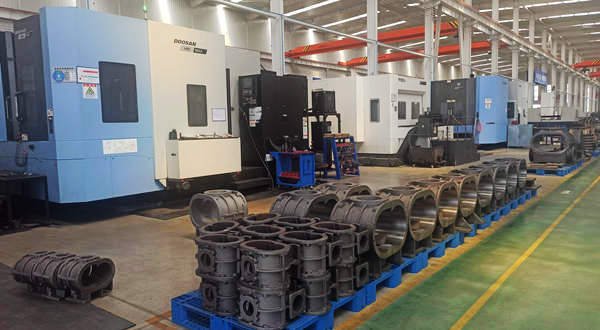
- Comprehensive quality control—from raw material inspection to final performance testing
- Complete accessory packages—silencers, filters, flexible connectors, check valves, pressure gauges, and foundation hardware
Ready to Specify Your FGD Roots Blower?
The selection of an oxidation blower is too important to leave to chance. Whether you are engineering a new FGD system, retrofitting an existing installation, or sourcing equipment for an overseas project, the right Roots blower makes the difference between reliable operation and costly downtime.
Contact Shangu Blower today to discuss your FGD project requirements. Our engineering team will work with you to specify the optimal blower configuration—matching flow, pressure, materials, and accessories to your specific operating conditions.