
Roots blowers are widely used in residential areas—often as part of community wastewater treatment plants, basement drainage systems, or high-rise building water supply booster stations. While these machines are reliable and efficient, they come with a significant downside: noise. A typical Roots blower can generate sound levels between 85 and 110 dB, far exceeding the comfort threshold for homes, schools, and recreational spaces. This noise often leads to resident complaints, legal disputes, and even fines for violating local noise regulations. The good news is that you don’t have to live with that roar. This guide provides a complete, step‑by‑step approach to reduce Roots blower noise effectively.
From simple bolt‑on solutions like silencers to full acoustic enclosures and vibration isolation, you will learn proven techniques that work in real‑world residential settings. We will also cover how to choose a low‑noise blower for new projects and answer the most frequently asked questions.
Understanding Roots Blower Noise: Why Is It So Loud?
Before you can control the noise, you need to understand where it comes from. Roots blower noise is not a single sound but a combination of aerodynamic, mechanical, and structural vibrations. Breaking down these sources helps you choose the right countermeasures.
1) Aerodynamic Noise (Air Pulsation)
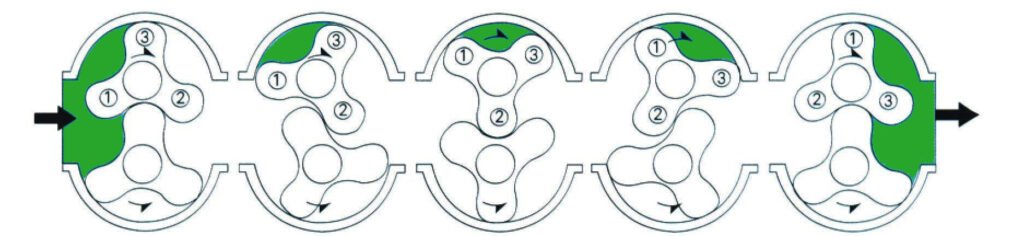
The dominant source of noise in a Roots blower is aerodynamic. As the two lobed rotors rotate in opposite directions, they trap air in the chamber and force it out through the discharge port. This creates strong, periodic pressure pulses—often called “air pulsation.” These pulses generate a low‑frequency hum and a high‑frequency hiss that can travel long distances, especially through pipes and ducts. The fundamental frequency is typically related to the blower’s rotational speed and the number of lobes.
2) Mechanical and Structural Noise
Mechanical noise comes from moving parts: gear meshing, bearing rolling elements. These sounds are usually higher in frequency and can be metallic or rattling in nature. Structural noise, on the other hand, occurs when the blower’s vibration is transmitted to the floor, foundation, or connected piping. The vibration turns walls, floors, and pipes into large sounding boards, amplifying the noise far from the source.
Key takeaway: To achieve significant noise reduction, you must treat both the airborne noise (from air pulsation and mechanical surfaces) and the structure‑borne noise (vibration).
Government Regulations on Residential Area Noise Levels
Compliance is not optional. Most countries and municipalities have strict noise limits for residential areas. For example, under the U.S. EPA guidelines and many local ordinances, daytime (7 a.m. – 10 p.m.) limits are around 55 dBA, while nighttime limits drop to 45 dBA or lower. In the EU, similar thresholds apply under Environmental Noise Directive 2002/49/EC. A typical Roots blower without treatment easily exceeds these levels by 30–50 dB, making immediate action necessary.
Violations can result in fines, stop‑work orders, and lawsuits from residents or homeowners’ associations. By implementing the noise control measures described in this guide, you can bring your blower into compliance and avoid legal trouble while being a good neighbor.
Top 5 Effective Ways to Reduce Roots Blower Noise
These five methods are the most practical and proven solutions. For best results, combine two or more of them depending on your budget and noise reduction target.
1. Install High-Efficiency Roots Blower Silencers (Mufflers) to Reduce Noise
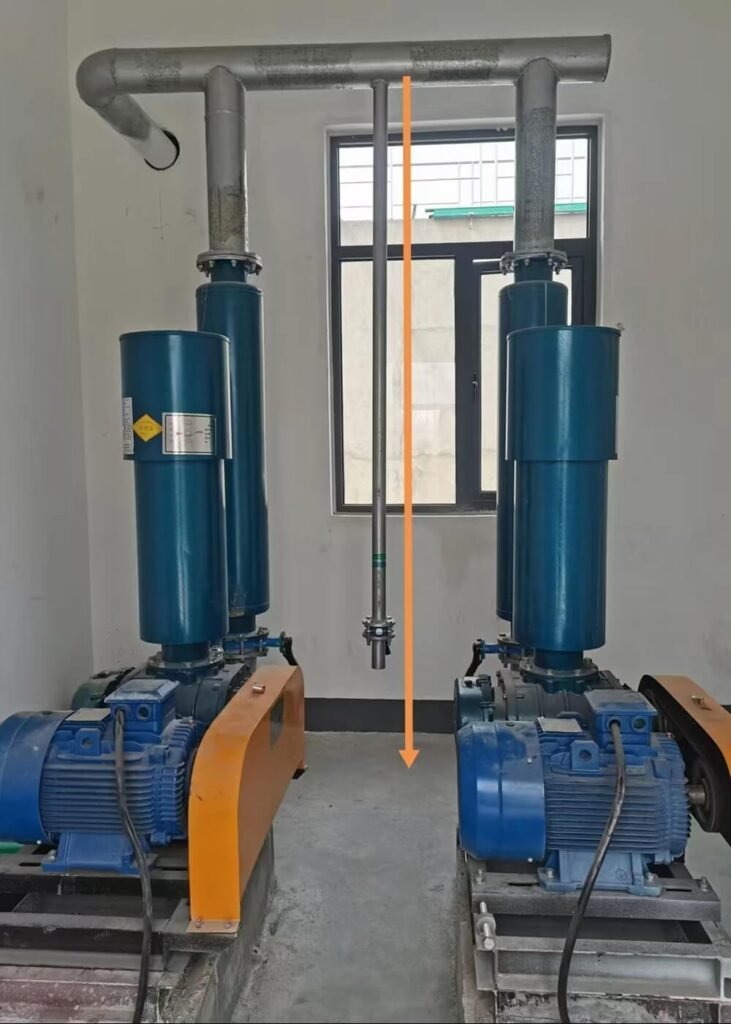
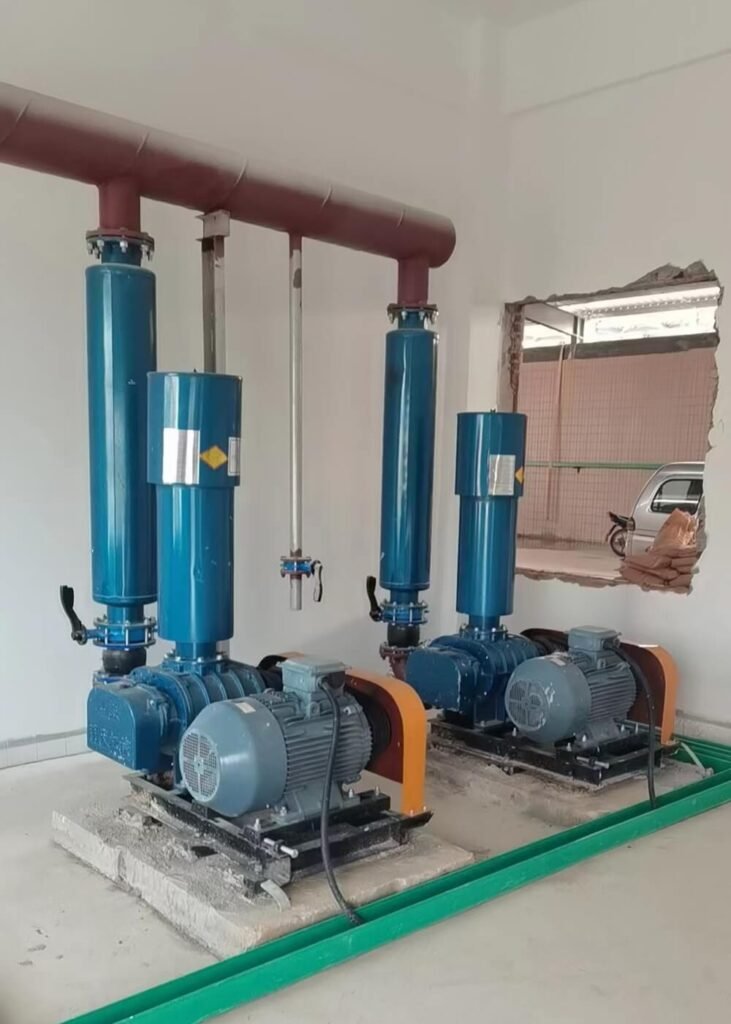
A roots blower silencer (often called a muffler) is the first line of defense against aerodynamic noise. It is installed on the inlet and/or outlet of the blower. There are two main types:
- Reactive silencers – Use expansion chambers and baffles to reflect low‑frequency pulsations back toward the source. Ideal for the powerful low‑frequency hum.
- Absorptive silencers – Contain acoustic foam or fiberglass to absorb high‑frequency hiss. Often used together with reactive elements in a combined silencer.
Properly sized silencers can reduce air pulsation noise by 15–25 dB. They are relatively low‑cost and easy to retrofit. Make sure to select a silencer rated for the blower’s airflow and pressure.
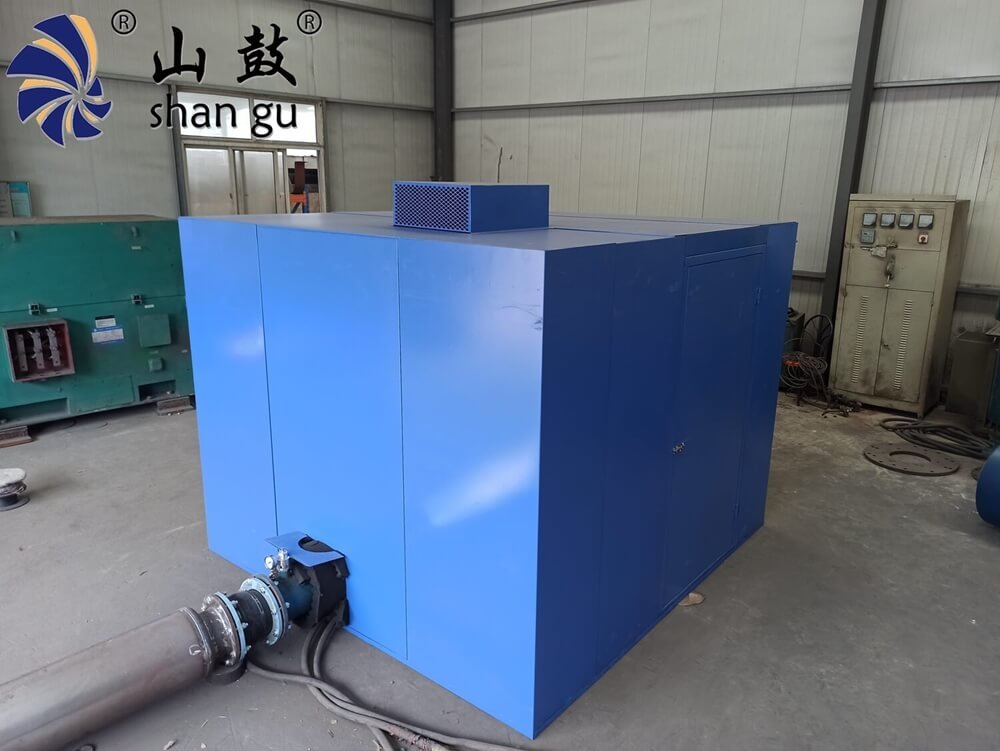
2. Deploy Custom Acoustic Enclosures (Sound Hoods)
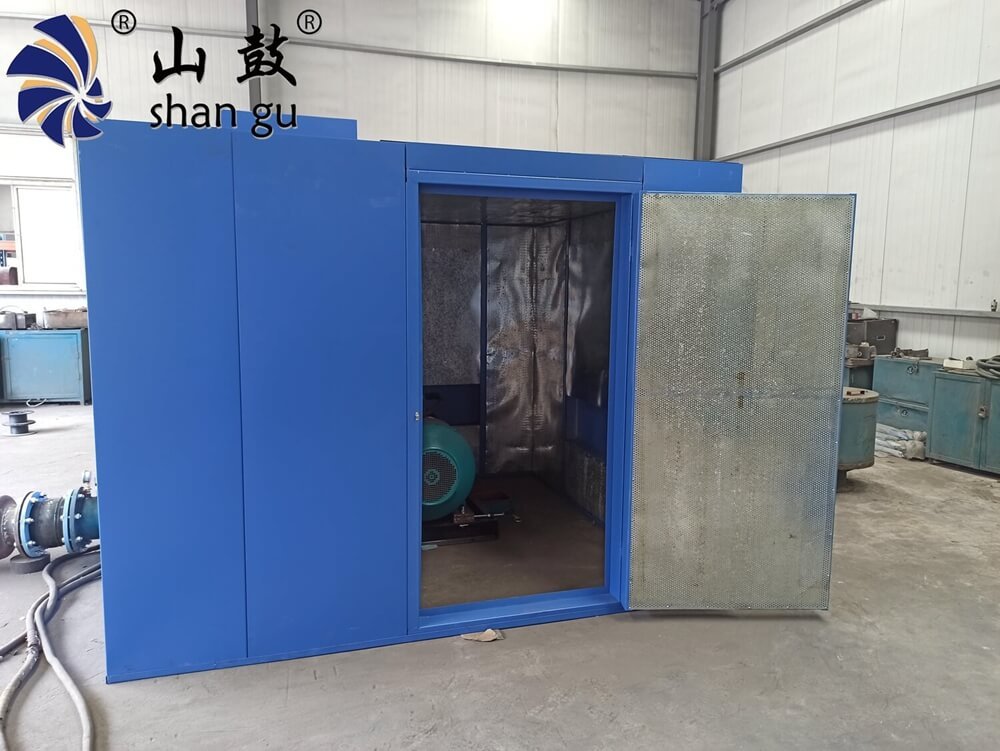
When the blower itself radiates noise from its casing, an acoustic enclosure (or sound hood) is the most comprehensive solution. The enclosure wraps around the entire blower unit, using layers of mass‑loaded vinyl, acoustic foam, and a perforated metal skin to block sound transmission.
Critical consideration: The blower generates heat while running. A well‑designed enclosure must include forced ventilation—usually a low‑noise fan with its own silencer on the intake and exhaust openings. Without proper cooling, the blower will overheat and fail prematurely. A good enclosure can achieve 10–15 dB of noise reduction, bringing even the loudest blower down to residential‑friendly levels.
3. Implement Vibration Isolation Techniques
Structure‑borne noise travels through solid materials and turns building elements into secondary noise sources. Breaking that path is essential. Use these two simple but effective techniques:
- Vibration isolation pads – Place high‑density rubber or spring isolators under the blower’s mounting feet. These absorb vibration before it reaches the concrete floor.
- Flexible rubber joints – Install flexible connectors (often called “flexible couplings” or “rubber bellows”) on the inlet and outlet piping. This prevents vibration from traveling down the pipework.
While vibration isolation alone typically provides only 5–10 dB of noise reduction, it is a critical complement to silencers and enclosures. Without it, even a quiet blower will make the entire building hum.
4. Construct Sound Barriers or Acoustic Walls
For outdoor installations where a full enclosure is impractical or too expensive, a sound barrier (noise wall) can block the direct line of sight between the blower and nearby residences. The barrier must be tall enough and placed close to the source. Effective materials include concrete, mass‑loaded vinyl, or treated wood with a sound‑absorptive surface facing the blower.
To be effective, the barrier should have no gaps or openings, and its height should exceed the “acoustic shadow” zone. A well‑built outdoor barrier can achieve 10–15 dB of reduction, especially for mid‑ and high‑frequency noise.
5. Optimize Regular Maintenance and Operation
Noise often increases over time as components wear. A proactive maintenance program can prevent unnecessary noise. Key actions include:
- Checking and replacing worn bearings.
- Ensuring proper lubrication of gears.
- Adjusting belt tension (for belt‑driven blowers).
- Inspecting and tightening all bolts and fasteners to avoid rattling.
- Cleaning or replacing air filters (clogged filters increase inlet noise).
Additionally, operating the blower at lower speeds (using a variable frequency drive, VFD) during night hours can dramatically reduce noise because sound power scales roughly as the fifth power of rotor speed. This operational approach costs nothing but planning.
Choosing the Right Low-Noise Roots Blower for New Projects to Reduce Nose
If you are planning a new installation or replacing an old unit, selecting a low‑noise blower from the start saves significant retrofit effort and cost.
A. Three-Lobe vs. Two-Lobe Roots Blowers
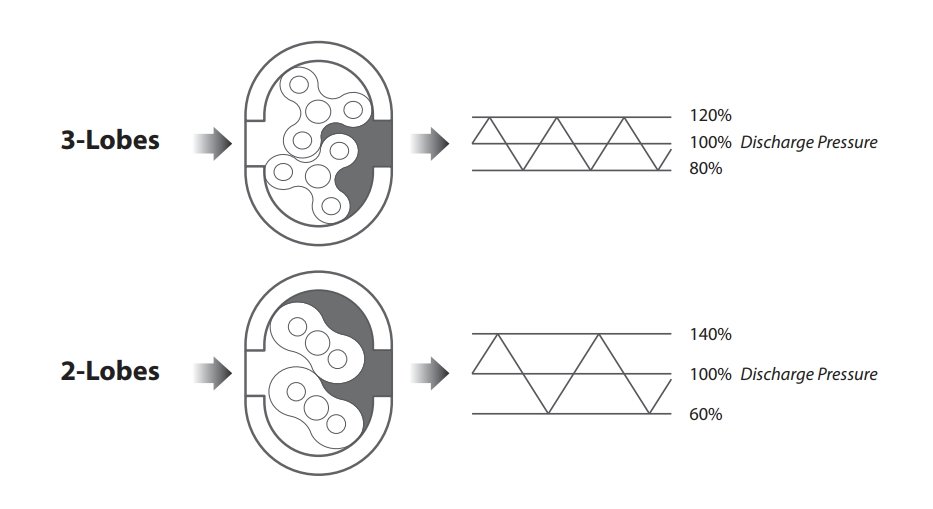
Traditional two‑lobe rotors create large pressure pulsations. Modern three‑lobe Roots blowers have a more gradual air release, which reduces pulsation amplitude by roughly 30% and lowers the noise floor by 3–6 dB at the source. The airflow is also smoother, making the blower more efficient. For residential areas, always choose a three‑lobe design.
B. Helical Gear and Inverter (VFD) Control
- Helical (herringbone) gears mesh more smoothly than straight‑cut gears, eliminating gear whine.
- Variable Frequency Drive (VFD) allows you to slow down the blower during low‑demand periods (e.g., late night). Since noise decreases dramatically with speed, a VFD can turn a moderately loud blower into a near‑silent one at night.
Case Study: Community Wastewater Station Noise Reduction
Background: A small residential community of 120 homes used a Roots blower for its on‑site wastewater treatment plant. The blower was located 15 meters from the nearest house. Measured noise level at the property line was 95 dB(A) at 1 meter from the blower; at the nearest bedroom window, it was 68 dB(A) at night. Residents filed formal complaints with the local environmental agency.
Solution implemented (based on this guide):
- Installed a combined reactive‑absorptive silencer on the blower outlet.
- Built a custom acoustic enclosure with forced ventilation (fan speed controlled by a thermostat).
- Added rubber vibration isolators under the blower base and flexible joints on all pipe connections.
- Adjusted operation schedule: VFD reduced blower speed by 40% between 10 p.m. and 6 a.m.
Results:
- Noise at the nearest window dropped from 68 dB(A) to 52 dB(A) during daytime, and to 46 dB(A) at night.
- The community achieved full compliance with local nighttime limit of 45 dB(A) (within measurement tolerance).
- Resident complaints stopped within two weeks.
- Total project cost: $4,800 (enclosure and silencer 70%, labor 20%, VFD adjustment 10%). Payback in avoided fines and improved relations: immediate.
Conclusion and Summary Table-Reduce Roots Blower noise
Reducing Roots blower noise in residential areas is not a mystery. It starts with understanding the noise sources—aerodynamic pulsation, mechanical friction, and structural vibration. Then, you apply a combination of the five proven methods: silencers, acoustic enclosures, vibration isolation, sound barriers, and smart maintenance. For new projects, choosing a three‑lobe blower with helical gears and a VFD gives you a head start.
No single solution fits every situation. Use the table below to quickly compare the effectiveness, suitability, and relative cost of each method.
| Noise Reduction Method | Estimated Noise Reduction (dB) | Best Suited For | Cost Level |
|---|---|---|---|
| Inlet/Outlet Silencer | 5 – 10 dB | High-frequency air noise & low‑frequency pulsation | Low to Medium |
| Acoustic Enclosure | 10 – 15 dB | Overall mechanical & radiated noise | High |
| Vibration Isolation | 5 – 10 dB | Ground and pipe structure vibration | Low |
| Sound Barrier (Outdoor) | 5 – 10 dB | Direct‑path noise from outdoor blowers | Medium |
| Regular Maintenance & VFD | 3 – 10 dB (plus operational flexibility) | All existing blowers; best combined with other methods | Low (VFD higher) |
Remember: For maximum effect, combine an inlet/outlet silencer with vibration isolation and an acoustic enclosure where possible. The sum is greater than the parts.
Frequently Asked Questions (FAQs)
Q1: How loud is a standard Roots blower?
A typical industrial or municipal Roots blower produces sound levels between 85 and 110 dB at 1 meter, depending on size, speed, and lobe configuration. This is well above the 45–55 dB limit for residential areas, which is why noise control is almost always required.
Q2: Will an acoustic enclosure cause the blower to overheat?
Not if it is properly designed. A quality roots blower acoustic hood includes a forced ventilation system: an intake fan with a silencer and an exhaust duct. The fan moves enough air to keep the blower within its manufacturer’s temperature limits. Always specify ventilation when ordering an enclosure.
Q3: What is the difference between a blower silencer and an enclosure?
A silencer (muffler) treats the aerodynamic noise coming out of the inlet or discharge pipe – it is installed inline with the airflow. An enclosure (sound hood) surrounds the entire blower machine to block the noise radiated from its casing and mechanical parts. For complete noise control, you often need both: the silencer treats the pipe noise, and the enclosure treats the radiated noise.
We hope this guide helps you achieve quiet, compliant, and neighbor‑friendly operation of your Roots blower. For specific product recommendations or a customized noise control plan, consult an acoustic engineer or a reputable blower accessory supplier.