
Roots blowers are vital positive displacement machines used across industries such as wastewater treatment, pneumatic conveying, and chemical processing. While their robust design ensures reliable airflow, truly optimizing performance and preventing costly downtime begins with a deep understanding of the machine’s internal anatomy. This guide, therefore, delves into the core components of a Roots blower, transforming you from a basic user into an informed operator capable of proactive maintenance and efficient troubleshooting.
1. The Casing and End Plates: The Protective Shell
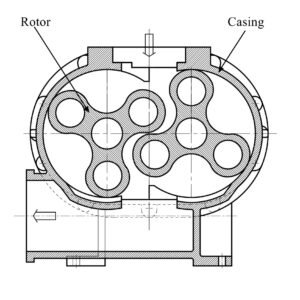
The casing and end plates form the stationary, sealed enclosure that houses all rotating parts. Essentially, this assembly contains the pressurized medium and directs its flow.
Precision Machining for Internal Clearances
The internal bore of the casing is machined to extremely tight tolerances. Crucially, this precision is not just for durability; it directly dictates the critical internal clearances between the rotor tips and the casing wall. In fact, these clearances are fundamental to the blower’s efficiency and pressure capability. Excessive clearance leads to significant internal leakage (or “slip”), thereby reducing volumetric efficiency and output.
Material Durability: Cast Iron vs. Specialized Alloys
The choice of material balances cost, strength, and corrosion resistance. Typically, durable cast iron is standard for most general industrial applications. However, for harsh environments—such as those involving corrosive gases, high moisture, or elevated temperatures—specialized alloys like ductile iron or stainless steel are employed instead to ensure long-term integrity.
2. The Rotors (Impellers): The Heart of the Machine
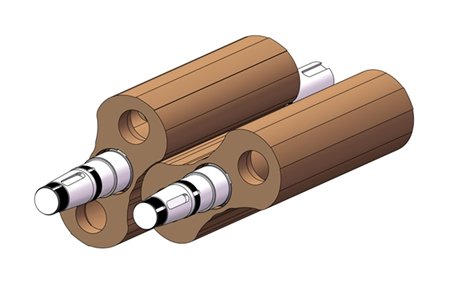
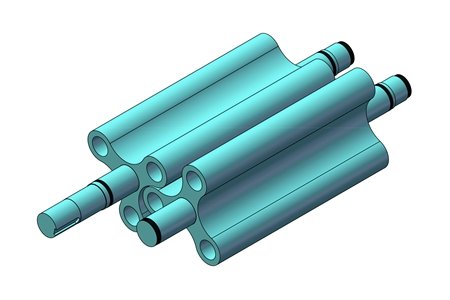
These are the meticulously engineered, lobed components that trap and move air or gas from the inlet to the outlet. Their synchronized rotation is the core pumping action.
Two-Lobe vs. Three-Lobe Designs: Which is Better?
The choice of Roots blower lobe design significantly impacts performance characteristics. Historically, traditional two-lobe rotors provide strong pulsations per revolution, though these can be mitigated with proper piping design. By contrast, modern three-lobe (and multi-lobe) rotors offer a smoother flow with reduced pulsation and lower noise levels, consequently making them preferable for applications sensitive to airflow pulsation and acoustic emissions.
The Importance of Non-Contact Rotation
A defining feature of the Roots principle is that the rotors never touch each other or the casing. This non-contact rotation is maintained by the timing gears (discussed next). This key design feature minimizes internal wear, thereby allowing the blower to run dry and handle clean air or gases efficiently. Ultimately, the consistent impeller clearance is key to long-term performance.
3. Timing Gears: Synchronizing the Power
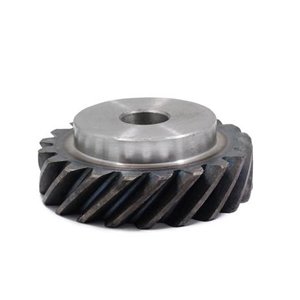
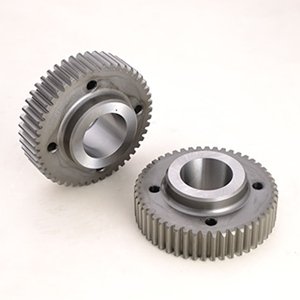
Mounted on the rotor shafts, these precision gears are the conductors of the entire operation, specifically ensuring the rotors maintain their precise phase relationship.
Why Precision Timing is Critical
Simply put, if the timing gears wear or fail, synchronization is lost. As a result, the rotors will collide, causing catastrophic and immediate damage. Symptoms like a sudden, severe knocking sound or complete lock-up often trace back to gear failure. Therefore, proper lubrication and alignment are non-negotiable for timing gears maintenance.
Helical Gears vs. Spur Gears: Efficiency and Noise
Spur gears are simpler but can be noisier. On the other hand, helical gears, with their angled teeth, engage more gradually and smoothly. This results in quieter operation, higher load-carrying capacity, and often greater longevity, making them a common choice in modern, high-performance blowers.
4. Bearings and Seals: Ensuring Smooth Operation
This system supports all rotational movement and contains lubricants, making it critical for overall reliability.
Heavy-Duty Bearings for Radial and Axial Loads
Bearings must withstand significant radial loads from rotor weight and torque, as well as axial (thrust) loads generated by pressure differentials. Accordingly, robust roller or ball bearings are selected based on the specific load profile and shaft speed to ensure stable, low-friction operation.
Sealing Mechanisms: Preventing Oil Contamination in Airflow
Seals perform the dual function of preventing bearing lubricant from leaking into the airflow and keeping air from escaping the casing. For demanding applications, especially in food, pharmaceutical, or chemical industries where oil-free air is mandatory, advanced mechanical seals in blowers are essential. Conversely, labyrinth seals are common for standard duty.
5. The Drive Shaft and Lubrication System
This is the power transmission and maintenance lifeline of the blower.
Input Shaft Functionality
The drive shaft transmits power from the motor (via a coupling or belts ) directly to the timing gear of the “drive” rotor. Its design must handle the full transmitted torque, and its coupling or belts must be precisely aligned to prevent vibration and premature bearing wear.
Splash Lubrication vs. Oil Bath Lubrication
- Splash Lubrication: A certain amount of lubricating oil is stored at the bottom of the gearbox. When the gear (or a specially designed oil slinger) on the blower’s drive shaft rotates at high speed, its teeth or edges dip into the oil sump, agitating and splashing the lubricating oil. The splashed oil droplets or oil mist are directly sprayed onto the meshing surfaces of the gears and the bearings that require lubrication. Bearings are typically not immersed directly in the oil but rely on splashed oil for lubrication.
- Oil Bath Lubrication: This is a direct lubrication method and can be seen as a more “thorough” form of splash lubrication. The components requiring lubrication (mainly gears and bearings) are partially or fully immersed directly in the lubricating oil sump at the bottom of the gearbox. During rotation, the components come into direct contact with the oil, achieving lubrication and cooling. Simultaneously, the rotation also agitates the oil, causing it to splash and assist in lubricating other parts.
6. Why Knowing These Roots Blower Core Components Matters for Maintenance
Understanding the industrial roots blower core components does more than provide basic knowledge; it fundamentally transforms reactive repairs into proactive care.
Diagnosing Common Issues (Overheating, Vibration)
Armed with component knowledge, you can systematically pinpoint overheating causes. For instance, is it from increased internal friction due to reduced clearances? A failing bearing? Or perhaps inadequate lubrication? Similarly, vibration can be traced to imbalanced rotors, misalignment, worn gears, or bearing failure. Referencing the table below further connects symptoms to potential faulty components.
Extending the Lifespan of Your Roots Blower
Consequently, preventative maintenance becomes logical and targeted: regular oil analysis warns of gear or bearing wear; vibration monitoring detects imbalance early; and checking seal conditions prevents contamination. Adopting this proactive approach ultimately maximizes uptime and extends asset life.
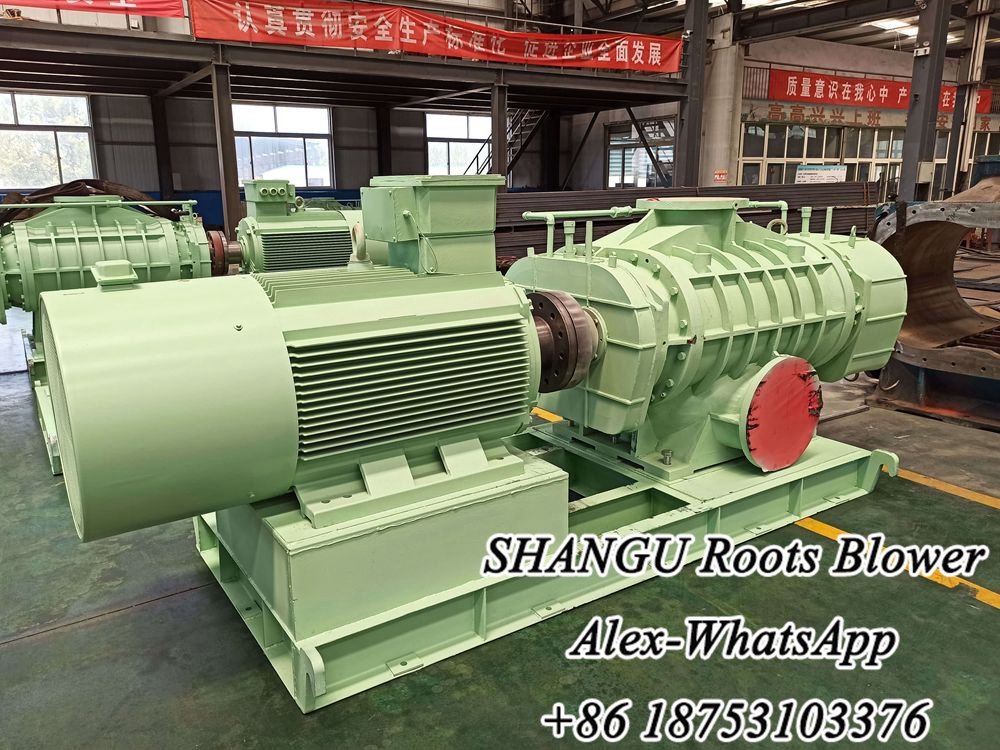
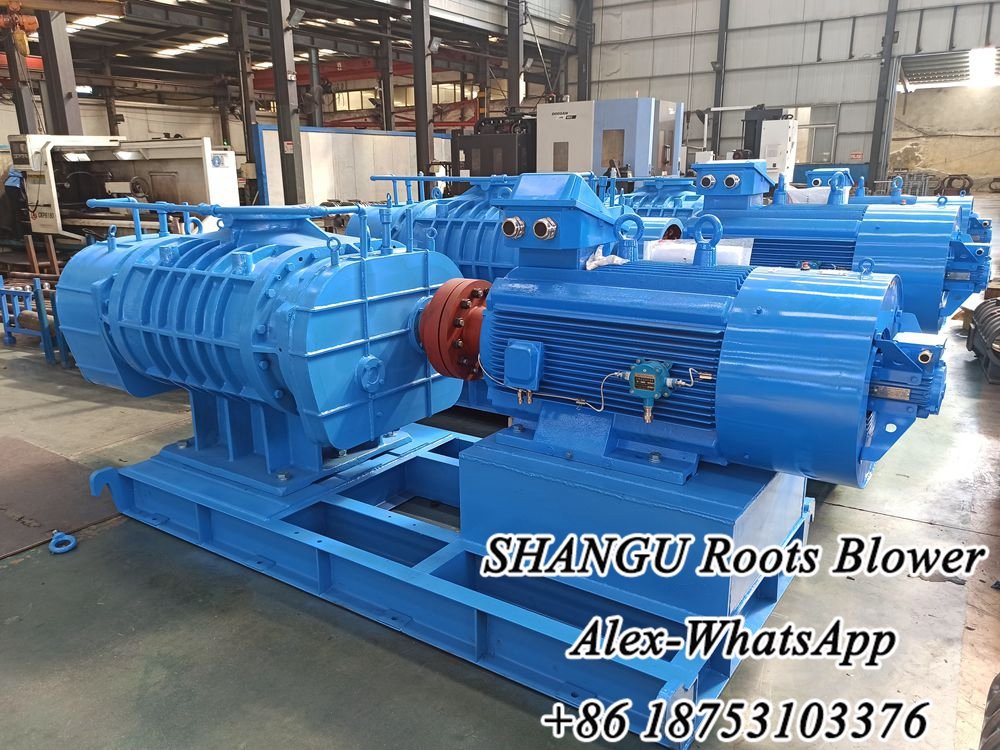
Technical Reference Table: Component Function & Failure Signs
| Component | Primary Function | Common Signs of Wear / Failure |
|---|---|---|
| Rotors | Move air/gas through the chamber. | Increased vibration, drop in flow/pressure, metallic knocking sounds. |
| Timing Gears | Keep rotors synchronized precisely. | High-pitched whining from gear case, overheating, eventual rotor contact. |
| Bearings | Support rotating shafts under load. | Grinding or rumbling noise, excessive shaft play (movement), heat at bearing housing. |
| Seals | Prevent oil/air leakage. | Oil in discharge air/piping, visible oil leaks on casing, loss of pressure. |
Conclusion
In summary, a Roots blower is a symphony of precisely integrated parts. From the casing that contains the pressure, to the synchronized rotors that move the air, followed by the precise timing gears, the supportive bearings and seals, and the driven shaft—each Roots blower component plays a critical role. Mastering the function and interaction of these Roots blower internal parts is, therefore, the foundation for understanding how a Roots blower works reliably. This comprehensive knowledge empowers you to operate efficiently, diagnose accurately, and maintain effectively, ensuring your blower delivers peak performance for years to come.